
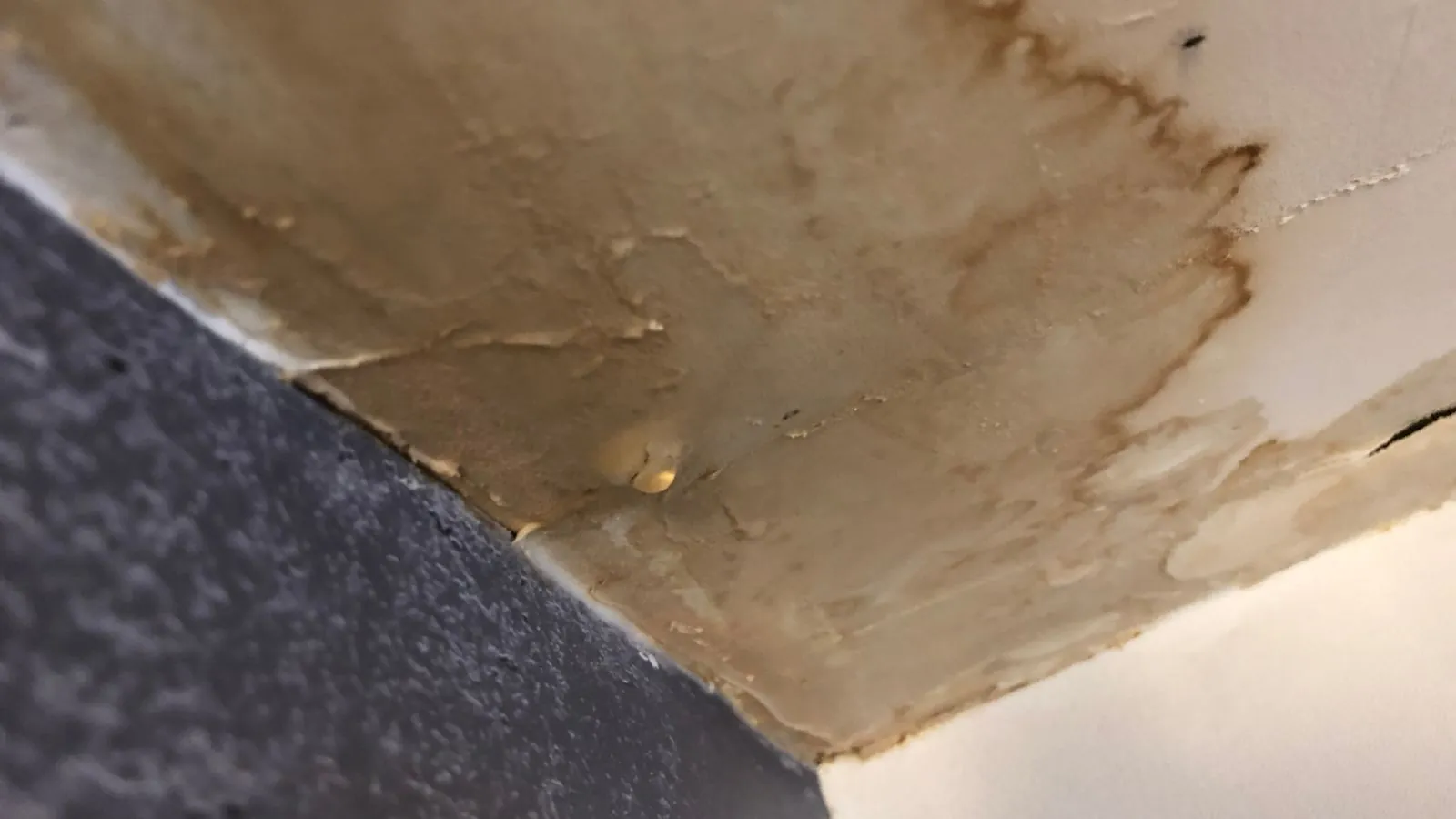
Central air conditioners pull water out of the air as they cool, and that water has to drain away. When the condensate line clogs, the drain pan overflows, or the coil freezes and melts, water ends up in your attic, closet or ceiling. This page explains how AC leaks damage homes and what cleanup involves. Most AC leaks are not emergencies in the first hour, but they get worse every day the unit runs.
How an AC leak starts
The cooling coil produces condensation, which drips into a pan and flows out through a drain line. Algae and debris can clog that line. When it backs up, water spills from the pan into whatever is below. A frozen evaporator coil can also thaw and overflow the pan. In humid central North Carolina summers an air handler can produce a lot of water, so the drain is working hard.
Where the damage shows up
Ceiling beneath an attic air handler
A brown stain, a sag or paint bubbling.
Utility closet floor
Damp carpet or flooring, a musty smell, a soft baseboard.
Wall near the unit
A stain that grows in humid weather.
Rooms below a second-floor unit
A ceiling stain that appears in the hottest months.
What to do right now
- Turn the AC off at the thermostat to stop producing more condensate.
- If water is dripping, place a bucket and keep people away from a sagging ceiling.
- Call an HVAC technician to clear the drain and check the pan.
- Call us if the ceiling, wall or floor is wet. We will meter the area and plan drying.
Drying work after an AC leak
Condensate water starts clean, but it often sits in insulation and drywall that stays damp in a closed attic. We remove soaked insulation, open the ceiling where needed and set air movers and a dehumidifier. In an attic or closet, we pay attention to ventilation so humid air does not simply move elsewhere in the house. We then check that the area is dry before any drywall is closed.
If the ceiling has already stained or sagged, our ceiling water damage repair page explains how that stage works. A leak that reached the wall is handled the way described on wall and drywall water damage repair.
Why AC leaks can turn into mold problems
Water that leaks slowly into a warm attic or closet creates damp conditions for weeks. Mold needs moisture, and an AC leak gives it a steady supply. We do not perform mold remediation under this service, but fast drying removes the moisture that mold needs. If you see widespread growth, ask whether your state licenses mold work and consult a professional who tests and remediates under the ANSI/IICRC S520 standard.
Preventing the next leak
Have a technician clean the condensate line each spring, install a float switch that shuts the system off if the pan fills, and check the pan during summer. These small steps are cheaper than a ceiling replacement.
Why air conditioners leak
A clogged condensate drain is the most common cause, followed by a cracked drain pan, a dirty filter that lets coils ice up and poor installation slope. In humid summers the system makes a lot of water, so a blocked line fills the pan quickly and spills into ceilings, closets and attics.
Quick steps
Turn the system off at the thermostat, check the drain pan if you can reach it safely and call an HVAC technician for the equipment. The restoration crew handles the wet ceiling, insulation and drywall.
Where AC water ends up
| Source | Typical symptom | Where water goes |
|---|---|---|
| Clogged condensate line | Overflowing drain pan | Ceiling and insulation below. |
| Cracked drain pan | Slow drip | Attic floor and ceiling. |
| Frozen evaporator coil | Water when ice thaws | Air handler closet and walls. |
| Poor pan slope | Standing water in the pan | Ceiling stains near the unit. |
For the resulting damage, see ceiling water damage, wall and drywall repair and water extraction.
What changes the cost
Cost depends on how long the leak ran, whether insulation and drywall are wet, how many rooms are involved, drying days and finish work. A closet floor is a small job. A ceiling that has been wet for a season is larger. Scope and price are explained before work starts. Want your real number? Call (844) 950-6900.
Questions homeowners ask
Is an AC leak an emergency?
Not always. If the ceiling is sagging or dripping heavily, treat it as urgent and turn the AC off. A small stain can usually wait for a same-day or next-day visit, but the longer it stays wet, the more can be damaged.
Who fixes the AC and who fixes the water damage?
An HVAC technician clears the drain and repairs the unit. We dry and restore the water-damaged materials. Both jobs should happen quickly.
Will my insurance cover AC leak damage?
Sudden overflow may be covered, while long-term leaks and maintenance issues often are not. Read your policy and ask your insurer.
Can I keep running the AC while the ceiling dries?
Usually not until the drain is cleared, because it keeps adding water. Ask the HVAC technician when it is safe.