
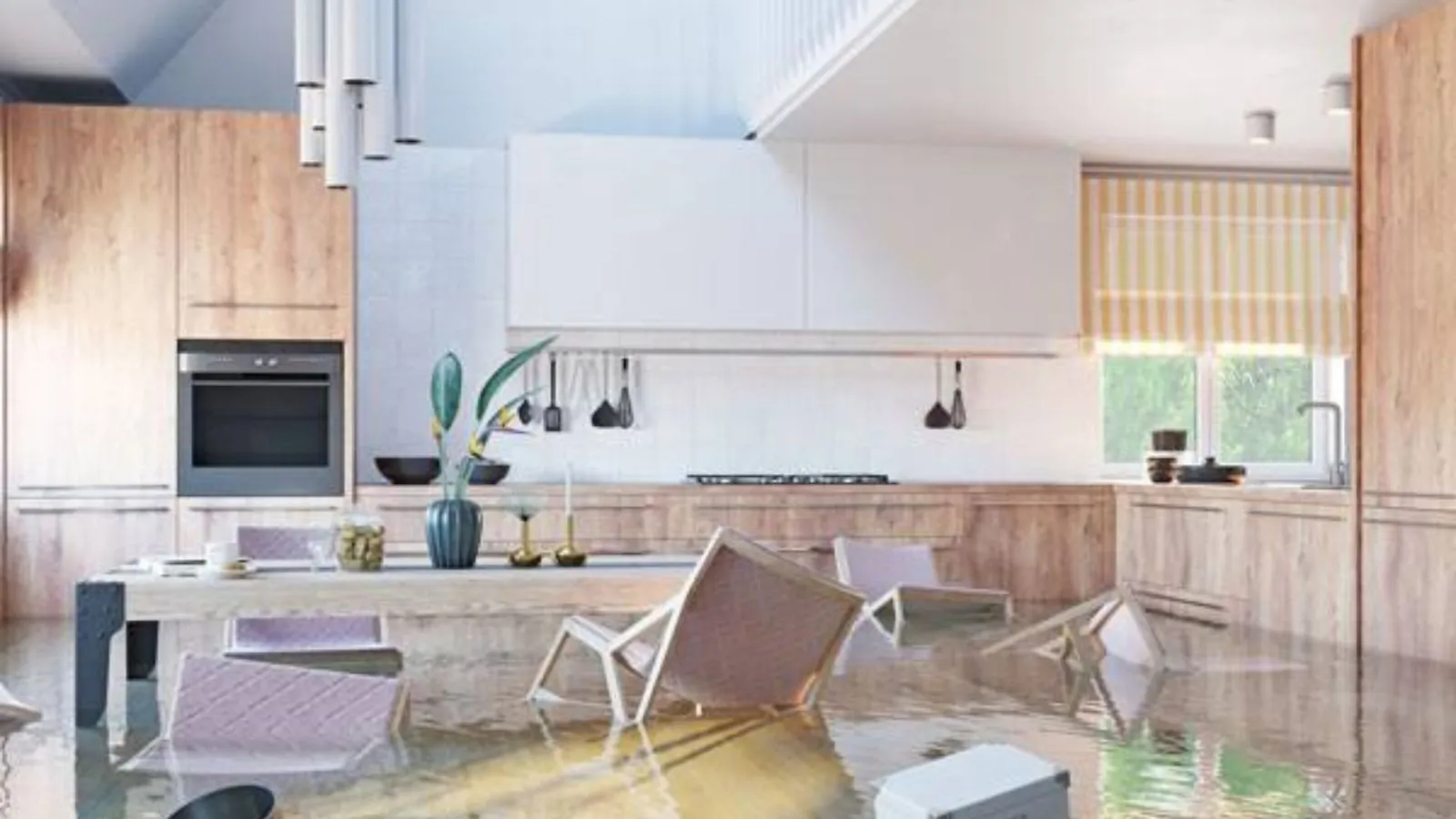
A kitchen has a sink, a dishwasher, a refrigerator water line and often an adjacent laundry or bathroom. Cabinets, built-in appliances and expensive flooring sit right on top of those water sources. When a leak happens, the choices you make in the first day often decide whether cabinets are saved or replaced. This page explains what to do, how kitchen damage is dried and where the hidden problems are.
What gets wet first in a kitchen
Water from a sink or dishwasher line goes into the cabinet base, then under the toe-kick and into the floor. From there it moves under flooring, along the subfloor and into adjacent rooms. Refrigerator lines leak behind the appliance. Water that stays inside cabinets for a few days swells particleboard and loosens veneers.
First actions
- Shut off the water to the sink, dishwasher or fridge, or close the main.
- Empty the cabinet under the sink and remove items from wet shelves.
- Remove standing water with towels or a wet vacuum.
- Photograph the cabinets, flooring and any visible source.
- Call us before pulling up flooring so we can advise on what to remove.
What can be dried and what cannot
| Material | Usually dried | Often replaced | |
|---|---|---|---|
| Solid wood cabinets | Yes, if caught early | If swollen or delaminated. | |
| Particleboard cabinets | Rarely | Often, once swollen. | |
| Tile over concrete | Yes | Grout and adhesive may need work. | |
| Laminate and floating flooring | Sometimes | Often, planks swell at edges. | |
| Hardwood | Sometimes, with floor drying systems | If cupping is severe. See [[hardwood-floor-water-damage-repair | hardwood floor water damage]]. |
Drying behind and below cabinets
Cabinets and countertops are installed against walls with gaps behind them, and the water goes there. We remove toe-kick boards, drill small ventilation holes where appropriate and use air movers under cabinet bases. If the leak ran under the floor, floor drying equipment can pull moisture from below. Drywall behind cabinets is checked with a moisture meter, and wet insulation is replaced.
When the leak reaches the ceiling below
If the kitchen is on an upper floor, water may stain the ceiling underneath. Check the room below. If you see a stain, read about ceiling water damage repair. If the leak began with a failed hose or valve, appliance leak water damage covers the cause in more detail.
Rental and condo kitchens
Since about half of Chapel Hill housing is renter occupied according to Census QuickFacts, a lot of kitchen leaks involve a tenant, a landlord and sometimes a neighbor below. Report the leak right away, take photos and ask the property manager how repairs are handled.
What to check before you reconnect anything
After the source is repaired, resist the urge to run the dishwasher or refrigerator ice maker right away.
A new hose or fitting should be checked for drips with a dry paper towel after the first cycle. Look for water behind the refrigerator, inside the cabinet under the sink and along the toe-kick. If the floor sounds hollow or feels soft near the dishwasher, tell the technician, because the subfloor may still be wet. Keep the cabinet doors open so air can reach the inside faces.
Documenting a kitchen loss
Photograph the appliance label, the failed part if you still have it and the damaged surfaces. Keep the part. An insurer may ask to see it, and it helps show that the loss was sudden. Note the date the appliance was installed and whether it was serviced recently. Ask your landlord or association whether a shared water line serves your unit, since that changes who repairs what.
Related pages cover water extraction, structural drying and burst pipe damage.
What changes the cost
Cost depends on the area wet, cabinet and flooring materials, how far water spread, drying days and rebuild or replacement. A single sink cabinet is a small job. A dishwasher leak that reached flooring across the room is larger. Scope and price are explained before work starts. Want your real number? Call (844) 950-6900.
Questions homeowners ask
Can wet kitchen cabinets be saved?
Solid wood and plywood often can. Particleboard that has swollen usually cannot. A moisture check shows what is possible.
Do I need to remove my flooring after a kitchen leak?
Not always. Tile and some sealed floors can be dried in place. Floating floors often need partial removal. We check with meters before deciding.
Is a kitchen water damage claim worth filing?
That depends on your deductible and the cost. Our appliance leak page explains how appliance failures are usually treated.
How soon should I call after a kitchen leak?
As soon as possible. Cabinet bases and subfloors absorb water within hours.