
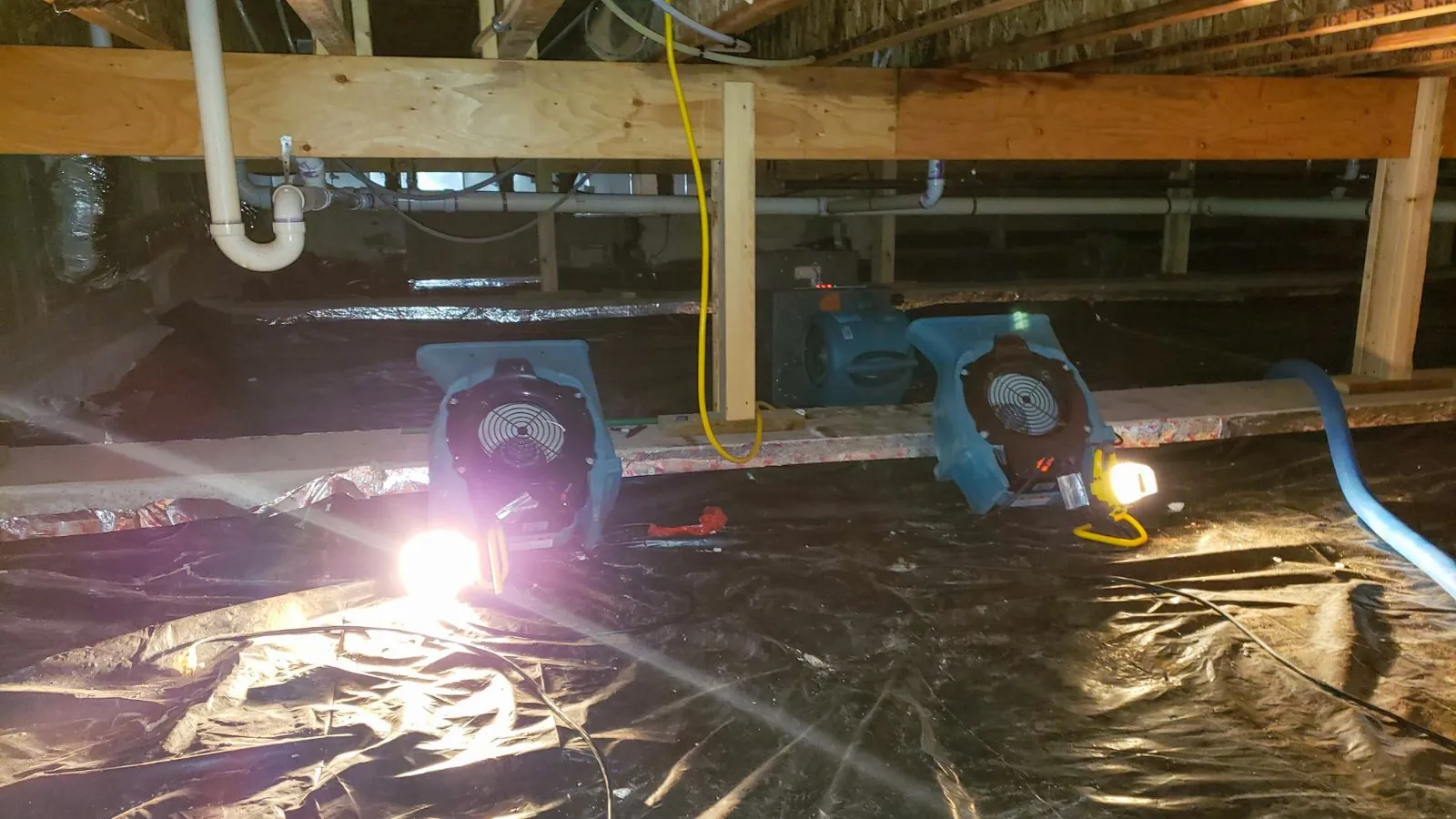
Many Chapel Hill homes sit on crawl spaces, especially older houses on hillsides and in neighborhoods near Franklin Street. A crawl space is a shallow area under the first floor that holds plumbing, ductwork and insulation. When water gets in, it affects everything above it. This page explains how water enters a crawl space, what damage it causes and how we dry it.
The ANSI/IICRC S500 standard treats wet framing and subfloors as materials that need measured drying, not guesswork.
How water gets under a house
Heavy rain can raise groundwater and send runoff toward a foundation, especially when the lot slopes toward the house. Downspouts that dump next to the foundation, a failed sump pump and plumbing leaks add to the problem. A broken supply line or a drain leak can also fill a crawl space slowly. The first sign is often musty air or a damp smell in the rooms above.
Signs your crawl space is wet
Standing water or mud on the ground
Water has come in from outside or a pipe is leaking.
Sagging or wet insulation
Insulation holds water and loses its effect.
Musty smell in the house
Humidity from below is moving up through the floor.
Cupped or soft hardwood above
Moisture is reaching the subfloor and flooring.
Rusty nails or fasteners under the floor
Long-term dampness.
If you are not comfortable crawling under the house, do not. Low spaces can have electrical hazards, standing water and pests.
What to do before the crew arrives
- Do not crawl into a space with standing water near wiring.
- Check that the ground outside slopes away and that downspouts are not emptying near the foundation.
- Turn off the water supply if a pipe is the source.
- Open interior doors and run a fan on the floor above only if the air is dry.
- Photograph the vents, any standing water and damaged insulation from the access point.
What we do in a wet crawl space
- Check the area for electrical hazards before work begins.
- Pump out standing water, directing it away from the foundation.
- Remove soaked insulation and damaged vapor barrier where it cannot be dried.
- Meter the joists, subfloor and sill plates, and set air movers and dehumidifiers that can reach them.
- Check the rooms above, especially hardwood and carpet, because moisture may rise into them.
- Document everything and explain whether the source needs a plumber, a drainage fix or a waterproofing contractor.
Restoration is not waterproofing
Drying removes water that has already come in. It does not stop future water from entering. If groundwater or surface drainage is the cause, a drainage or waterproofing specialist may be needed. We will tell you honestly when the problem is a repair or drainage issue and not a restoration one. For a flood that came from a storm, read about flood damage cleanup.
Humidity and the house above
A wet crawl space adds moisture to the whole house. That humidity can affect hardwood, doors and paint. The Town of Chapel Hill and Orange County have regional guidance on stormwater, and the FEMA flood map can help you understand whether your lot is in a mapped flood hazard area. If you are unsure, ask your local building department what rules apply before making structural changes.
For a floor above that has already begun to cup, see hardwood floor water damage repair.
Signs from inside the house
Cold or soft floors above a crawl space, cupping hardwood, a musty smell near vents and sticking interior doors can all hint at moisture below. Outside, look for downspouts that empty near the foundation, soil that slopes toward the house and vents that are blocked or missing screens.
Safety in tight spaces
Crawl spaces are cramped, dark and may hold wiring, ducts and pests. Avoid entering a flooded crawl space yourself. Technicians use protective gear and lighting and check for standing water near electrical lines before starting. Vapor barriers, insulation and ductwork are inspected too, since wet insulation and torn plastic sheeting keep moisture trapped long after the water is gone.
Crawl space moisture sources compared
| Source | Typical sign | Usual fix |
|---|---|---|
| Plumbing leak | Wet insulation under one area | Repair pipe, dry framing. |
| Groundwater | Standing water after rain | Drainage correction, pumping. |
| Humid air | Condensation on ducts and joists | Ventilation or vapor control. |
| Downspout discharge | Wet soil near the foundation | Extend downspouts. |
See hardwood floor damage and structural drying for the rooms above.
What changes the cost
Cost follows the amount of water, how accessible the space is, whether insulation and vapor barrier need replacement, how many drying days are needed and what is damaged above. Tight spaces take more labor. Scope and price are explained before work starts. Want your real number? Call (844) 950-6900.
Questions homeowners ask
Is a wet crawl space an emergency?
Standing water with exposed wiring or a leaking pipe is urgent. A damp crawl space after a heavy rain is less urgent but should be addressed within days.
Can you stop water from coming back?
We dry and restore. Preventing water entry usually needs drainage, grading or waterproofing work from a specialist.
Should I put a dehumidifier in my crawl space myself?
A small unit may help, but standing water and wet insulation need removal first. Ask a professional to assess.
Will wet crawl space insulation dry out?
Usually not. Fiberglass and similar batts that sagged or got soaked are often replaced.