
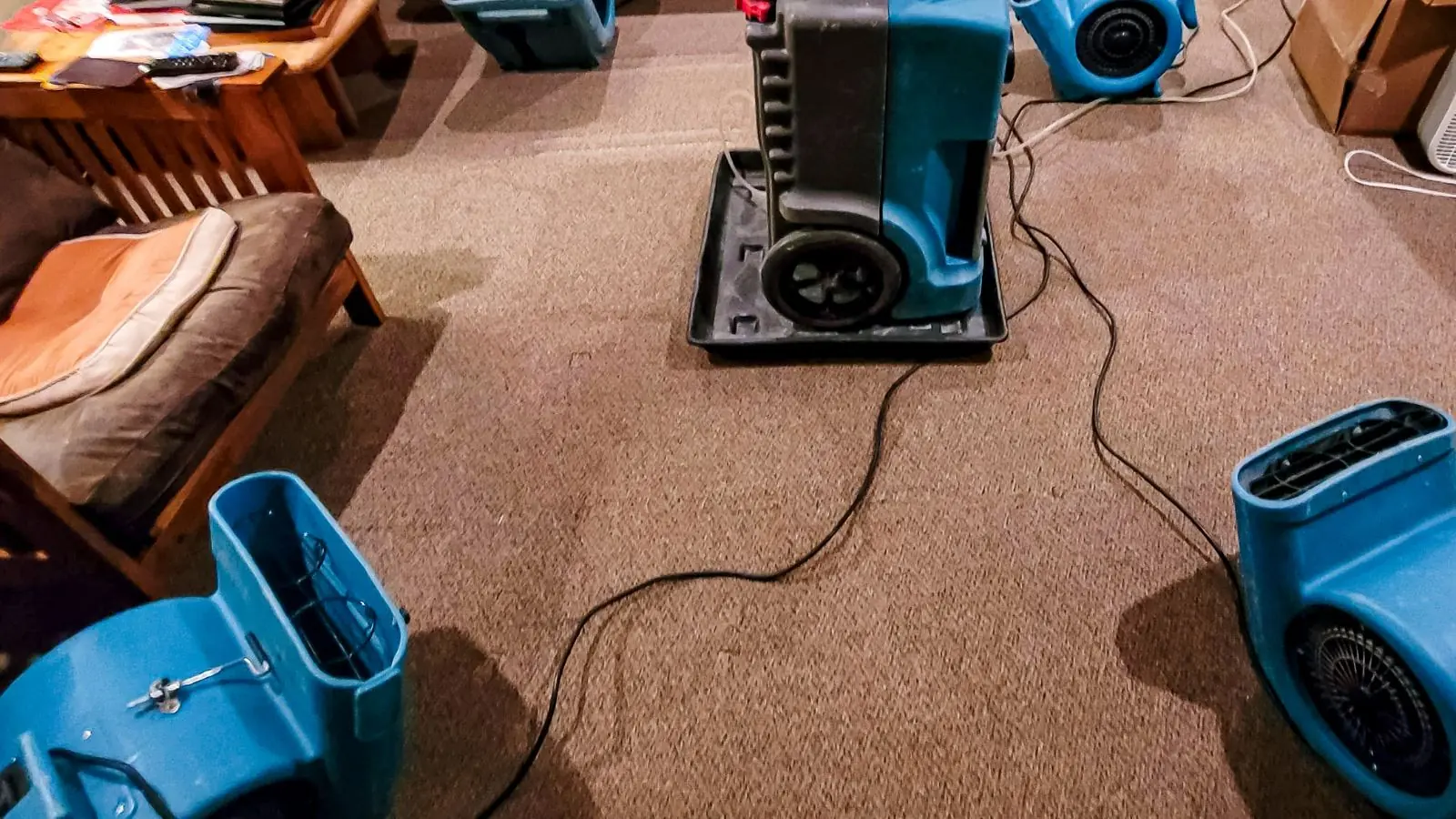
Structural drying is the process of removing moisture from walls, floors, ceilings and framing after the visible water is gone. It uses meters to find moisture, air movers to push dry air across wet surfaces and dehumidifiers to pull moisture out of the air. This page explains how it works, how long it takes and why guessing is risky. It also covers water mitigation, the term insurers often use for the first steps that limit damage.
The method on this page is based on the ANSI/IICRC S500 standard for professional water damage restoration.
Why does my house still smell damp?
If you cleaned up a leak and the house still feels humid, smells musty or has walls that feel cool and clammy, water may be trapped. Floors can look dry on top and still hold water in the subfloor. Baseboards hide wet drywall. Closed cavities hold moisture for weeks. That is where structural drying and dehumidification come in.
How structural drying works
- Moisture mapping. A technician uses a moisture meter and, where useful, a thermal imaging camera to find wet areas and set a baseline.
- Drying plan. Equipment is placed based on the materials and the size of the wet area.
- Air movers. These direct air across wet surfaces to speed evaporation.
- Dehumidifiers. These remove moisture from the air so evaporation keeps going. Low grain refrigerant dehumidifiers and desiccant units are common.
- Monitoring. Readings are taken on a schedule, equipment is adjusted and the drying continues until moisture reaches the target.
- Documentation. Readings are recorded so your insurer or contractor can see the process.
Equipment and what it does
| Tool | Purpose | Notes |
|---|---|---|
| Moisture meter | Measures moisture in building materials | Gives a number, not a guess. |
| Thermal camera | Shows temperature patterns that may mean moisture | Used with meters, not alone. |
| Air mover | Moves air across surfaces | Placement matters more than quantity. |
| LGR dehumidifier | Pulls moisture from the air | Works best in a closed, heated space. |
| Floor drying mat | Draws moisture from under flooring | Used for some hardwood and subfloors. |
What to do before the crew arrives
- Keep doors and windows closed in the wet area so dehumidifiers can work.
- Do not use space heaters to speed drying.
- Keep children and pets away from cords and equipment.
- Move belongings out of the room if you can do so safely.
- Write down what you notice, such as odors or damp spots, for the first readings.
How long does drying take?
Most structural drying jobs take several days, depending on the materials and how much water they absorbed. Dense materials like hardwood and framing dry more slowly than carpet or drywall. Humidity outdoors affects speed. The crew measures daily and removes equipment when readings reach the drying goal, not at a fixed date.
Water mitigation and drying
Water mitigation means stopping further damage. It includes shutting off the source, extracting water, removing materials that cannot be saved and drying the structure. It is a different job from rebuilding. Our water extraction service covers the first stage and structural drying covers the next. If the drying is for a flooded lower level, see basement water damage.
Can I dry it myself with fans?
Household fans move air but do not remove moisture from it, and closed wall cavities stay wet. A rented dehumidifier may help in a small, minor event, but without a meter you cannot confirm the structure is dry. Hidden moisture can lead to odor, swelling and mold, so for anything beyond a small spill, have it measured.
Why drying is measured, not guessed
Moisture meters read wood and drywall, thermo-hygrometers read air temperature and humidity, and daily logs show whether the structure is trending toward dry. Equipment is added, moved or removed based on those readings. A room that feels dry to the hand can still hold water in studs and subfloor, which is why a final reading matters more than how the room feels.
Living in the house while it dries
Drying equipment is loud and uses power. Plan for noise, keep pets and children away from cords and ask the crew which doors and windows should stay closed. Closed doors help the dehumidifiers work, so avoid opening and closing wet rooms unnecessarily.
Related pages cover carpet drying, hardwood floors and wall drying.
What changes the cost
Cost depends on the area and materials wet, the water category, equipment days, the number of monitoring visits and whether materials must be opened or removed. Scope and price are explained before work starts. Want your real number? Call (844) 950-6900.
Questions homeowners ask
How do I know when my home is dry?
Moisture meters compare readings in wet materials with readings in dry reference materials. Drying is done when readings reach the target.
Do you rent dehumidifiers or air movers?
Our service is professional drying with monitoring. We do not offer equipment rentals.
Is structural drying the same as water mitigation?
Mitigation is the broader term for limiting damage and includes drying. Structural drying is the part that removes moisture from the building.
Why does the equipment run for days?
Materials release water slowly. Stopping early can leave moisture in wall cavities and subfloors.