
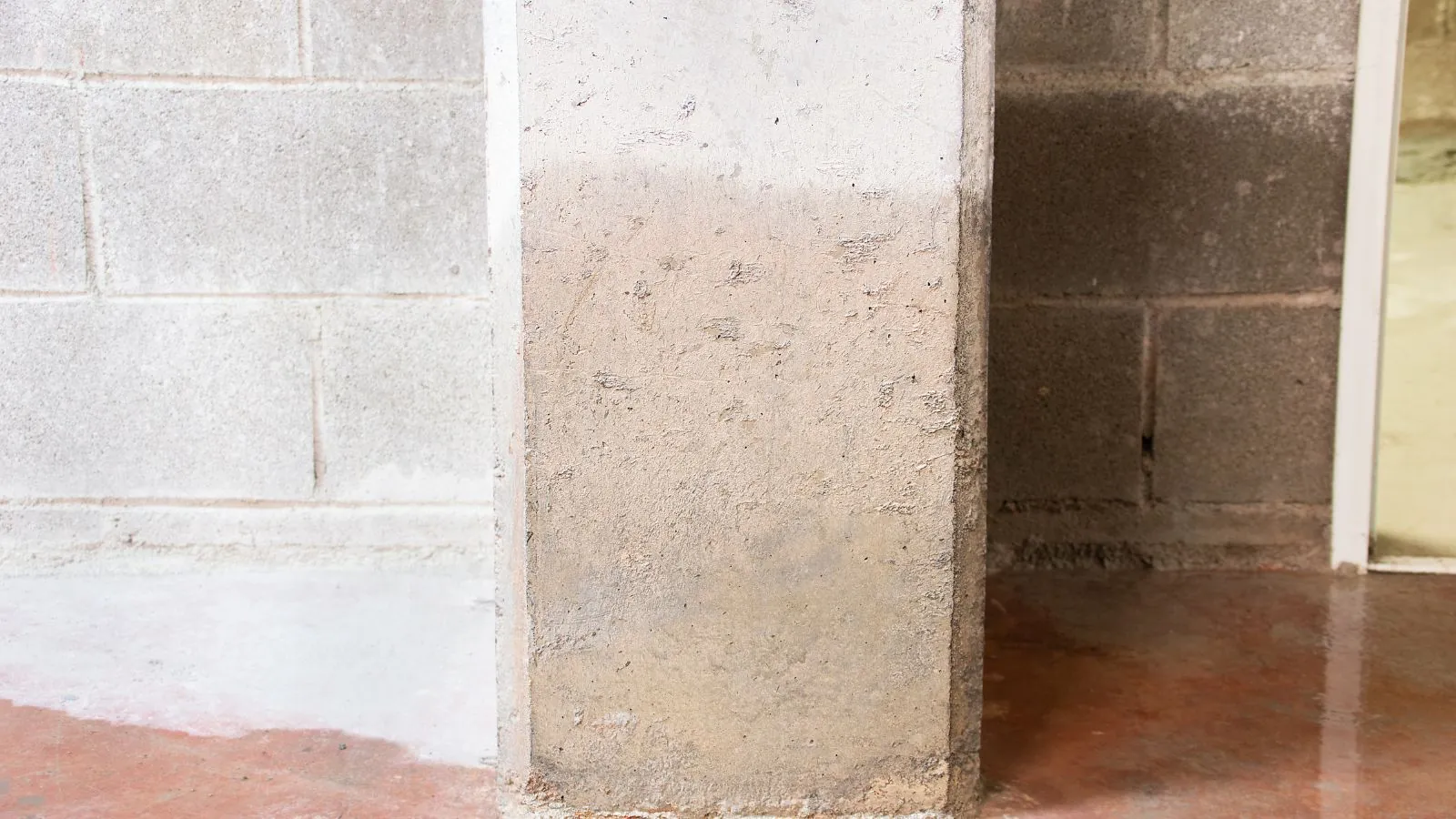
A slab leak is a leak in a water line that runs under or inside a concrete slab foundation. Slab-on-grade construction is common in newer Chapel Hill neighborhoods and townhome communities. Because the leak is hidden, damage often appears first as a symptom, not as a puddle. This page explains the signs, the steps to take and how we handle the water damage once a leak is confirmed.
Drying near a slab follows the ANSI/IICRC S500 standard, and concrete often needs longer monitoring than drywall.
Signs of water under your floor
If you are searching for why part of your floor is warm, damp or stained, these are the usual clues.
A warm spot on the floor
A hot water line may be leaking under the slab.
A water bill that jumps with no change in use
A leak is running somewhere, even if you cannot see it.
Sound of running water when everything is off
Water is moving through a line under pressure.
Damp carpet, buckled flooring or baseboard stains
Moisture is rising or spreading from below.
Cracks in tile with damp grout
Water is pushing up through the slab or subfloor.
Check the meter
Turn off every fixture and appliance and look at your water meter. If the leak indicator or dial moves, water is escaping somewhere. Close the main shutoff and see whether the movement stops. If it does, the leak is inside the house or under it. A plumber can use leak detection equipment to pinpoint the line.
What to do before the crew arrives
- Shut off the main water valve if you suspect a slab leak.
- Do not walk barefoot on warm floor patches.
- Lift rugs and move furniture off wet flooring.
- Photograph wet spots and note your water meter reading.
- Call a plumber for leak detection and call us for drying.
When a slab leak is an emergency
A slab leak that is soaking flooring, running into walls or creating standing water is urgent. Shut off the main, call a plumber and call us. Water under a slab can undermine soil, and water coming up into living space can damage flooring and drywall quickly.
What we handle after a slab leak
The plumbing repair stops the leak. Our work covers the water that already spread.
- Extract any standing water and wet carpet.
- Meter floors, baseboards and walls to map moisture.
- Lift or remove wet flooring where drying in place will not work, including floating floors.
- Dry the subfloor, wall bases and surrounding areas using air movers and dehumidifiers.
- Document the damage for your insurer and coordinate with your plumber on any access holes.
If the leak is under tile or hardwood, see hardwood floor water damage and carpet water damage for the surface-specific steps.
Slab leaks and insurance
Insurance treatment varies. Some policies cover water damage from a hidden plumbing failure but not the cost of reaching the pipe, and some treat long-term leaks differently from sudden ones. Ask your insurer which part of the loss fits, and keep leak detection reports and plumbing invoices.
How slab leaks are found
Plumbers use acoustic listening gear, pressure tests and thermal imaging to locate leaks under concrete. Restoration crews map where moisture has spread, which does not always match where the pipe failed. Water follows cracks, plumbing penetrations and the edges of the slab, so a wet spot in a hallway may come from a pipe in another room.
Repair choices
Typical plumbing options include spot repair through the slab, rerouting lines through walls or ceilings and repiping. Each affects how much flooring and wall is disturbed, so coordinate the plumber and the drying crew before anyone opens the floor.
Slab leak signs compared
| Sign | What it suggests | Next step |
|---|---|---|
| Warm patch on the floor | Hot water line leak | Shut off the heater and call a plumber. |
| Sound of running water | Active leak | Check the meter test. |
| Rising water bill | Slow leak | Meter test and leak detection. |
| Cracks and damp baseboards | Water spreading | Moisture mapping and drying. |
For flooring effects, see hardwood floor damage and carpet damage.
What changes the cost
Cost depends on how long water has been leaking, how much flooring and wall area is wet, whether materials can be dried or must be replaced, drying days and rebuild. Because slab leaks are often found late, the scope can be larger than a sudden pipe burst. Scope and price are explained before work starts. Want your real number? Call (844) 950-6900.
Slab, crawl space or basement
Not every Chapel Hill home has a slab. Older homes and many hillside lots have crawl spaces or basements instead. If water is under a raised floor, read about crawl space water damage, and if it is in a lower level, read about basement water damage.
Questions homeowners ask
Do you handle slab leak water damage emergencies at night or on weekends in Chapel Hill?
Yes. The 24/7 line answers any hour. If water is coming up through the floor or your meter is spinning, shut off the main and call. A plumber will locate the leak while we address the wet materials.
My floor is warm in one spot. Is that a slab leak?
It can be, especially if the warm spot is on a hot water line path. A plumber can confirm with leak detection tools.
Can you find the slab leak?
Leak detection is a plumbing task. We dry and restore the damage the leak caused and can coordinate with your plumber.
Why is my floor wet but I see no pipe leak?
Water can move along the slab and appear far from its source. Moisture meters help map the wet area.