
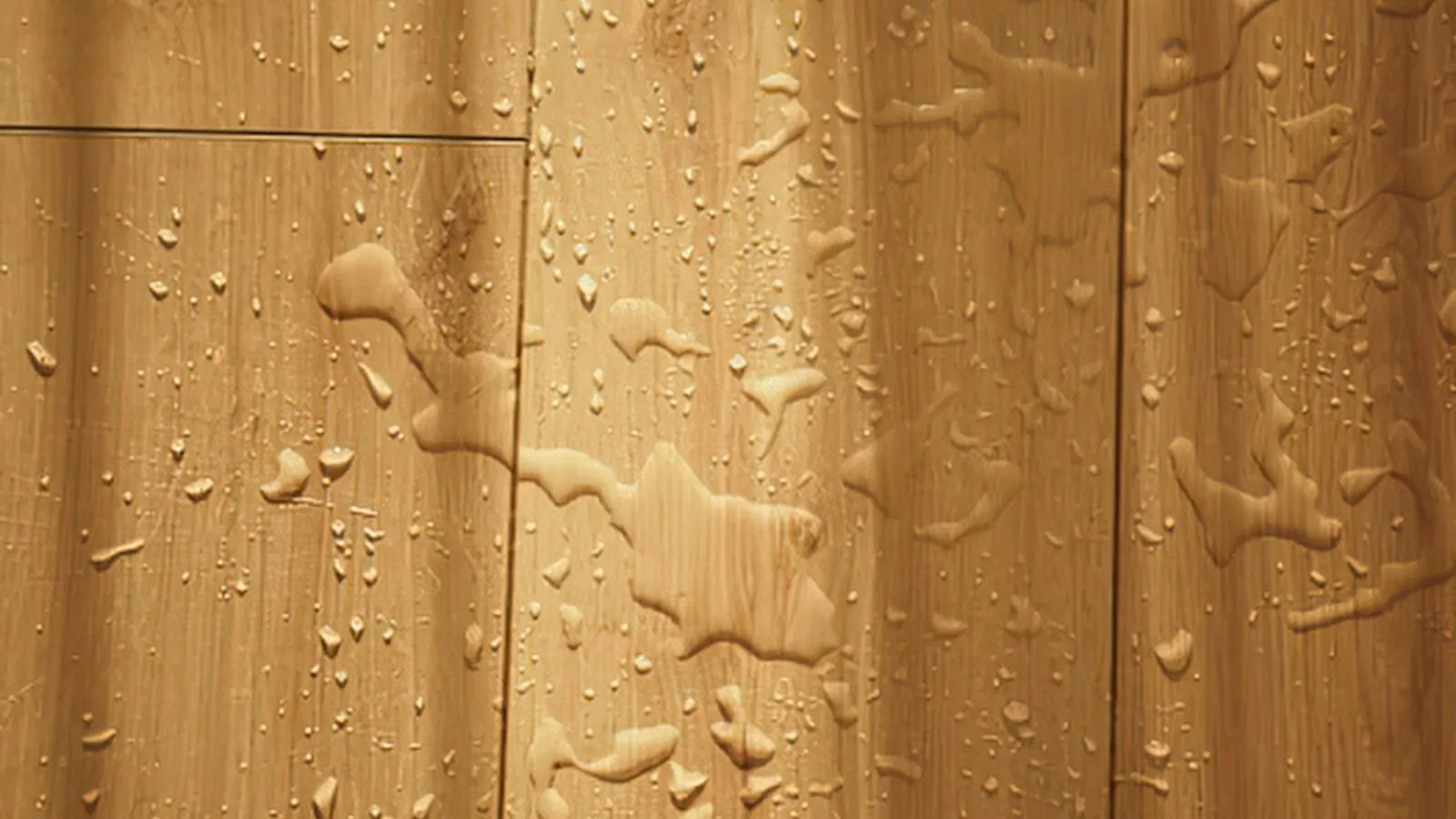
Hardwood floors are an investment, and water is their main enemy. Wood absorbs moisture and swells, which causes cupping, crowning or buckling. Whether the floor can be saved depends on how long it was wet, the kind of flooring and how fast it is dried. This page explains the damage patterns, drying options and when replacement is the better choice.
ANSI/IICRC S500 describes how wood floors are dried and monitored, which is why readings matter more than appearance.
What water does to wood
Boards soak up water from below and from the edges. The bottom of a board swells faster than the top, so edges rise and the center sinks, which is called cupping. If the center rises higher than the edges, the floor is crowned, often after sanding a cupped floor before it dried. Severe swelling can push the floor up from the subfloor, which is buckling, and can lift a whole section.
Cupping
Board edges rise and the center dips. Common after a slow or long moisture exposure.
Crowning
The center of boards rises. Can appear after a floor is sanded too soon.
Buckling
The floor lifts from the subfloor. A sign of heavy saturation.
Dark stains or black marks
Water has stayed long enough to affect the wood or the finish.
First steps
- Stop the water source and remove standing water.
- Lift area rugs and furniture and wipe the surface.
- Do not use heat to speed drying, since fast uneven drying can crack boards.
- Do not sand or refinish until a moisture meter says the floor is at a stable level.
- Call us to meter the floor and plan drying.
How hardwood is dried
Floor drying systems use mats or panels connected to air movers to pull moisture from the boards and subfloor. In some cases, small holes are drilled in the subfloor or the floor is lifted at an edge. Dehumidifiers keep the air dry so water leaves the wood instead of returning. The crew records readings each visit and adjusts equipment. Drying can take days or longer for thick or solid hardwood.
Engineered hardwood has a plywood core with a hardwood top, and it can fail differently. Water that gets into the seams can cause the layers to separate. Tell us which type you have.
Save or replace?
| Condition | Usual path |
|---|---|
| Recent leak, mild cupping | Dry and monitor. Many floors flatten as they dry. |
| Long exposure, severe cupping | Dry, then evaluate sanding or replacement. |
| Buckled boards | Remove affected sections, dry subfloor. |
| Black stains from long exposure | Replacement of affected boards. |
A floor that looks bad today may look better after it dries, so patience is valuable. We will tell you honestly if boards need replacement.
Where the water came from
Hardwood floors in Chapel Hill homes get wet from many causes, including slab leaks, crawl space moisture, kitchen leaks and storm intrusion. For specific causes, see slab leak water damage, crawl space water damage and kitchen water damage.
Why speed and patience both matter
Starting drying quickly limits how far water travels into the boards. Waiting patiently after drying matters just as much, because wood needs time to move back toward its normal moisture level. Floors dried too hard often gap, and floors sanded too soon often crown. A good plan records readings in several spots, compares them with a dry reference board and sets a sand or refinish date only after the numbers settle.
Finishes and stains
Polyurethane finishes slow water absorption at the surface but do not stop it at the seams. Wax and oil finishes let water in faster. White rings or cloudy patches are sometimes only finish damage and can be refinished, while dark spots usually mean the wood itself is stained.
What changes the cost
Cost depends on floor area, type and thickness of wood, how long it was wet, drying days and whether sanding, refinishing or replacement is needed. Scope and price are explained before work starts. Want your real number? Call (844) 950-6900.
Questions homeowners ask
Can cupped hardwood go back to normal?
Often yes if it dries slowly and fully. Some floors stay slightly cupped and need sanding after drying.
How long does it take to dry a hardwood floor?
Usually several days to weeks depending on moisture and wood thickness. The crew measures until the floor reaches a stable level.
Should I pull up the boards myself?
Not before a meter check. Removing boards can relieve pressure in a buckled floor, but you can also damage boards that could have dried in place.
Is a water-damaged hardwood floor covered by insurance?
Sudden water damage is often covered. Gradual moisture or a lack of maintenance often is not. Ask your insurer.