
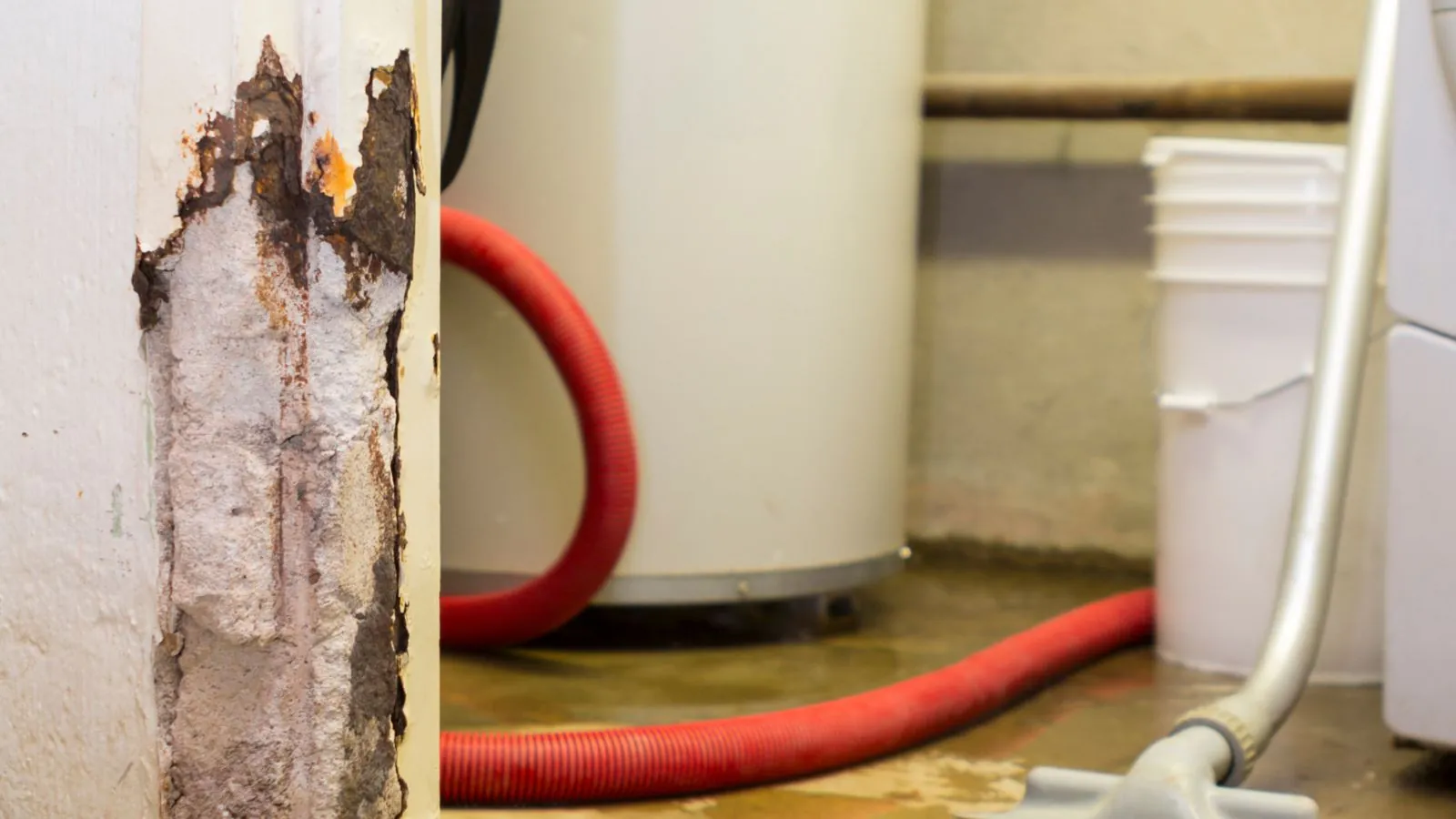
Most residential water heaters hold forty to eighty gallons, and a failed tank can release most of that quickly. A slow leak from a fitting or relief valve is quieter and often goes unnoticed until a floor softens. This page explains how to shut a failing heater down safely, how cleanup works and what makes water heater leaks different from other plumbing leaks.
Water from a failed tank is normally clean at the start, and ANSI/IICRC S500 guidance favors fast extraction before it degrades.
First steps when a water heater leaks
Safety comes before cleanup. For an electric heater, switch off the breaker if the panel is dry. For a gas heater, turn the gas control to off, and if you smell gas, leave the house and call the gas utility or 911. Then close the cold water supply valve on top of the tank so the tank stops refilling.
Do not touch the heater or stand in water near it. If the leak is large, close the main water shutoff as well. A plumber will drain, repair or replace the heater. The restoration crew handles the water it released.
Where water heater leaks go
Water heaters usually sit in a basement corner, a garage, a closet or an attic. Each spot sends water somewhere different.
Basement
Water runs to the lowest point, often a floor drain or a stored-items corner. See basement water damage cleanup.
Garage
Concrete handles water well, but adjoining walls and stored cardboard soak quickly.
Interior closet
Water spreads under walls into carpet and hardwood in nearby rooms.
Attic
Water drops through insulation and ceilings. A ceiling repair is often needed.
Cleanup after a water heater failure
- Extract standing water with wet vacuums and pumps.
- Check walls, baseboard, carpet and subfloor with a moisture meter.
- Lift or cut out wet pad and insulation that will not dry in place.
- Set air movers and a dehumidifier, and monitor readings until the area is dry.
- Document the damage for your insurer. Water heater failures often fall under sudden water events, but wear and neglect can matter.
Heater water is usually clean, but sediment and rust can stain materials. A tank that leaked for weeks can have wet floors that smell musty, and that needs closer moisture checking.
Slow leaks versus sudden failure
| Sign | What it suggests | What to do |
|---|---|---|
| Puddle around the base | Tank or fitting leak | Shut off water, call plumber and cleanup. |
| Rusty water or stained floor | Long-term corrosion | Meter the floor, check nearby walls. |
| Water from the relief valve pipe | Pressure or temperature issue | Call a plumber right away. |
| Sudden flood of water | Tank failure | Shut off water and power, then call us. |
Replacing the unit
A leaking tank usually cannot be repaired. Shut off the cold supply valve and the power or gas to the heater, drain the tank if you can and call a plumber. Check the pan and drain line on the replacement so the next failure is contained. Many tanks last roughly a decade, so note the age on the label and consider flushing and inspecting an older unit before it fails.
What changes the cost
Cost depends on how much water spread, what materials it reached, whether it ran into walls or a lower floor, drying days and repairs. A heater in a tile-floored closet is a small loss. One in a finished basement can be larger. Scope and price are explained before work starts. Want your real number? Call (844) 950-6900.
If a hose or valve failed rather than the tank, our appliance leak water damage page may describe your situation better.
Questions homeowners ask
Do you handle water heater leak emergencies at night or on weekends in Chapel Hill?
Yes. The 24/7 line takes calls any hour. Shut off the water supply and power or gas to the heater, then call. If the tank has failed, tell the dispatcher how much water is on the floor.
Do I replace the water heater before cleanup?
A plumber can handle the heater while we remove water, and doing both at once is common. The tank may need to be drained or disconnected first so the area is safe to dry.
Is a water heater leak covered by insurance?
Sudden failure often falls under water damage coverage, but the heater itself and slow leaks can be treated differently. Ask your insurer.
How long can a leaking water heater damage a floor?
Even a slow leak can rot subfloor over weeks. Check the floor around the base and look for soft spots or stains.