
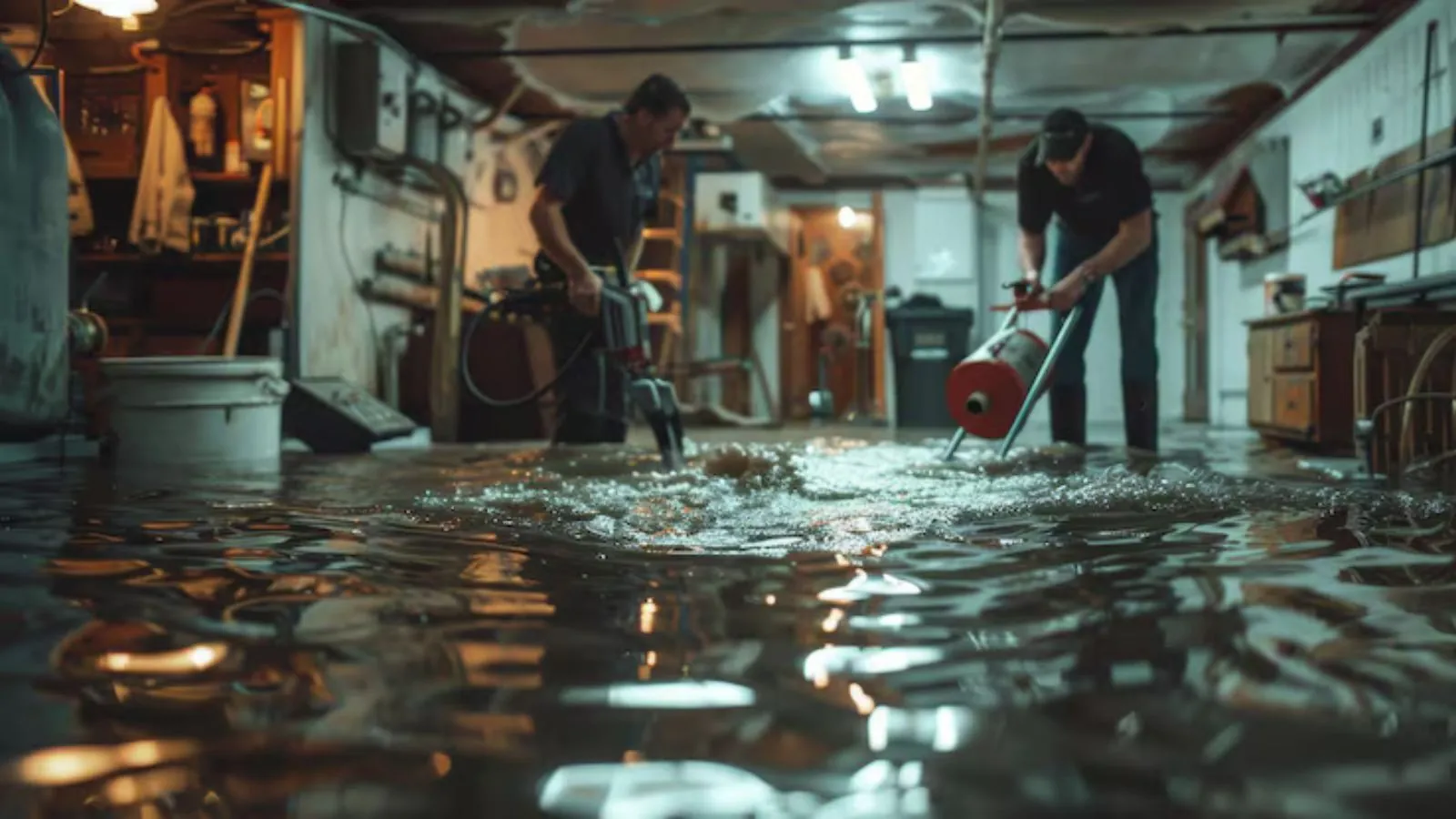
When water is standing in a Chapel Hill house, extraction is the first job and everything else waits on it. Water extraction means physically removing bulk water with pumps and wet vacuums before any drying equipment can do its work. This page covers when that is an emergency, what the equipment does, and what to do before the crew arrives. Our line is open 24/7, including nights and weekends.
When standing water is an emergency
Treat any water deeper than a skim on the floor as urgent. Water moves into baseboards, drywall and subfloor faster than most people expect, and it keeps wicking upward after the surface looks dry. Carpet pad holds water like a sponge. Hardwood begins to cup within a few days. The sooner water leaves the building, the fewer materials end up on the tear-out list.
If the water came from a burst supply line, the first move is the main shutoff, not a mop. If it came up through a floor drain or toilet, stay out of it and read the sewage backup cleanup page first. Rising creek or storm runoff carries soil and bacteria, so wear boots and keep children and pets away.
Before the crew arrives
You can do a few safe things in the first fifteen minutes.
- Stop the source if you can reach it dry. A main water shutoff near the meter or where the line enters the house is the usual spot.
- Cut power to the wet area only if the panel is in a dry spot. Never wade through water to reach it. If outlets are underwater, call the power company or 911 before you call us.
- Lift small furniture, rugs, shoes and paper off the wet floor and onto foil or plastic blocks.
- Photograph the water, the damage and the source before anything moves.
- Keep people and pets out of any water that may have come from a drain, a toilet or outdoors.
How extraction works, step by step
- A technician checks the water depth, the source and how far it has spread, and reads moisture in the walls and floors.
- Bulk water comes out first. Deep water goes through submersible or truck-mounted pumps, and shallow water through extraction wands and wet vacuums.
- Carpet and pad are extracted in place where they can be saved, or lifted and cut out where they cannot.
- Wet baseboards and low drywall may be opened so trapped water can escape.
- The crew sets air movers and dehumidifiers and hands the job to the structural drying stage.
Extraction removes water. It does not finish the job. A floor can feel dry to the touch and still hold moisture in the subfloor, which is why meters guide the next steps.
Which equipment goes with which job
| Situation | Typical equipment | Why it fits |
|---|---|---|
| Inches of water over a finished floor | Portable pumps and wet vacuums | Gets bulk water out without tearing up the floor. |
| Soaked carpet and pad | Extraction wand, weighted extractor | Pulls water out of fibers before the pad is judged. |
| Deep water in a basement | Submersible pump, discharge hose | Lowers the level steadily so walls are not stressed. |
| Water inside wall cavities | Small access holes, injection drying | Reaches water that surface tools cannot. |
What changes the cost
Price depends on the kind of water, how much floor area is wet, which materials soaked up water, how many days of drying follow, and how much rebuild is needed afterward. Clean water from a supply line costs less to handle than water from a creek or drain. Scope and price are explained before work starts, and a technician can only give a real number after seeing the space. Want your real number? Call (844) 950-6900.
Homeowners policies usually respond to sudden and accidental water, such as a burst line, but flood and rising water are generally excluded and need separate flood coverage. Check your policy or ask your insurer, and photograph everything before cleanup.
Water extraction in Chapel Hill homes and rentals
Roughly half of Chapel Hill homes are renter occupied according to Census QuickFacts, so many calls start with a tenant and a landlord who both need documentation. Take dated photos and tell your property manager right away.
A basement or crawl space job uses different pumping than a first-floor spill, so tell the dispatcher where the water is. We also serve Durham and the towns nearby.
Questions homeowners ask
Do you handle water extraction emergencies at night or on weekends in Chapel Hill?
Yes. The dispatch line answers 24/7, so a flooded floor at two in the morning gets the same attention as a weekday call. Same-day response is offered when a crew is available, and the dispatcher will tell you honestly what to expect. While you wait, stop the source, keep power off to wet areas if it is safe, and lift belongings off the floor.
How long does water extraction take?
Pulling bulk water usually takes a few hours for a typical room or small basement, longer for deep or widespread water. Drying afterward takes days. The crew measures moisture and tells you when the drying goals are met.
Can I extract the water myself with a shop vacuum?
You can remove a shallow spill that way, but a household shop vacuum leaves most water in the pad and subfloor. If water has been on the floor for more than a few hours, or reached drywall, have a crew meter it.
Is water extraction the same as water damage restoration?
No. Extraction is the first stage. Restoration includes drying, cleaning, removing materials that cannot be saved and rebuilding. Our flood damage cleanup page explains the full sequence for larger losses.