
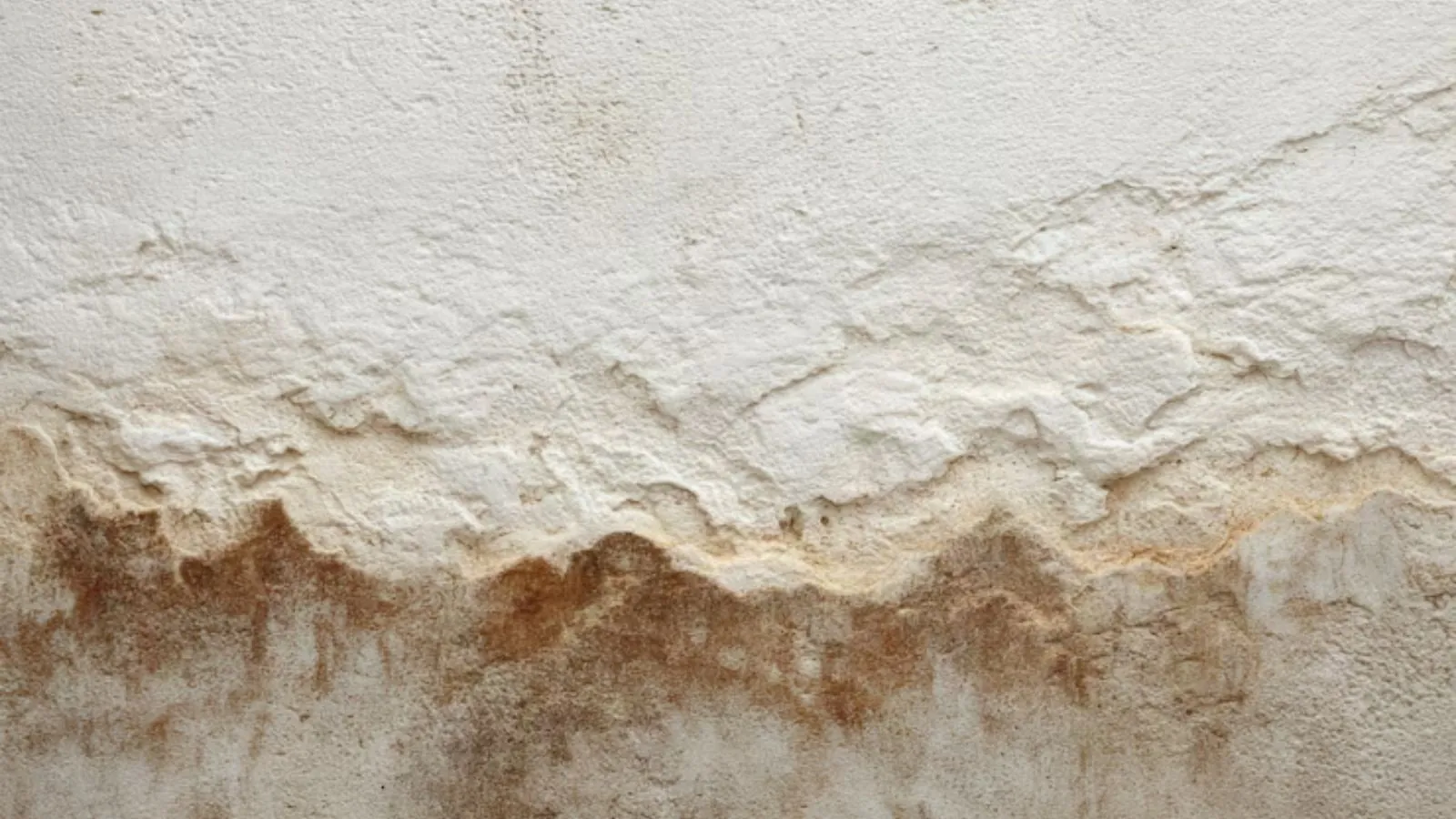
Drywall is made of gypsum between paper layers, and it weakens when it gets wet. Water can enter through a pipe leak, a roof leak, a window, a shower or a flood. The stain you see is often just the visible edge. This page explains how wall water damage is diagnosed, when walls can be dried in place and when sections need to be cut out.
Signs that a wall is wet
Brown or yellow stain
Water moved through the wall and left minerals behind.
Bubbling or peeling paint
Moisture is pushing the paint away from the surface.
Soft or crumbling drywall
The gypsum has absorbed water and lost strength.
Warped baseboards
Water traveled down the wall to the floor.
Musty odor
Moisture has been present long enough for odor.
How we find the moisture
A moisture meter and a thermal imaging camera help map the wet area. We check above and below the stain, adjacent walls and the floor. A wet wall may have insulation that holds water. In some cases, small inspection holes are cut to confirm conditions inside the cavity.
Dry in place or cut out
| Situation | Typical approach |
|---|---|
| Clean water, recent, surface-level | Dry in place with air movers and dehumidifier. |
| Wet insulation inside cavity | Open the wall, remove insulation, dry framing. |
| Drywall soft, crumbling or stained heavily | Cut out and replace. |
| Contaminated water | Cut out above the waterline and clean framing. |
| Long-term leak with odor | Open wall, find the source and dry or replace. |
In many cases a flood cut is made, which means removing the lower part of the drywall, usually a couple of feet above the waterline, so framing can dry and be inspected. Cutting out wet material is not a sign of overkill. It protects the structure.
After drying
Once moisture readings return to normal, the wall is closed with new drywall, taped, textured and painted. We can do or coordinate this work. Paint should wait until the wall is dry, because trapped moisture can ruin the finish.
Common causes in Chapel Hill homes
Wall water damage often traces back to a few sources. A leaking shower pan or tub drain can soak a bathroom wall. A failed supply line behind a toilet or sink can reach adjacent walls. Roof and window leaks send water down exterior walls during heavy rain. For the ceiling side of those leaks, see ceiling water damage repair. For a pipe that froze and split inside an exterior wall, see frozen pipe water damage.
Mold and wet drywall
Wet drywall that stays wet can grow mold, and mold needs moisture. We do not diagnose health issues. Fast drying removes the moisture source, and if growth is widespread you should speak to a mold professional who follows ANSI/IICRC S520 and ask whether your state licenses mold work.
Plaster, paneling and other wall types
Not every wall is drywall. Older homes may have plaster over lath, which dries slowly and can crack. Paneling and wallpaper trap moisture against the surface. Tile surrounds in bathrooms hide wet backer board. Tell the technician what is behind the finish, because that decides whether the wall can be dried through small holes or must be opened.
What to do while you wait
Move furniture away from the wall, lift curtains and open the room to air. Do not hang anything on a wet wall and do not seal it with paint or primer. Take a clear photo of the stain with a coin beside it for scale so changes in size are easy to see.
Related pages cover water extraction, structural drying and burst pipe damage.
What changes the cost
Cost depends on the wall area, whether insulation and framing are wet, whether sections must be replaced, drying days and finish work. A small stain from a one-time leak is a smaller job than several rooms of wet walls. Scope and price are explained before work starts. Want your real number? Call (844) 950-6900.
Questions homeowners ask
Can I just cut out the wet part of the wall myself?
You can, but cutting without a meter may remove more than needed or miss wet areas. A technician maps the moisture first.
How long does drywall take to dry?
A few days for a small area, longer for wet insulation and framing. Drying is complete when readings return to normal.
Will painting over a water stain work?
Not until the source is fixed and the wall is dry. Otherwise the stain returns and moisture stays trapped.
Do you repair and paint the wall too?
We can coordinate or provide rebuild work after drying. Scope and price are explained before work starts.