
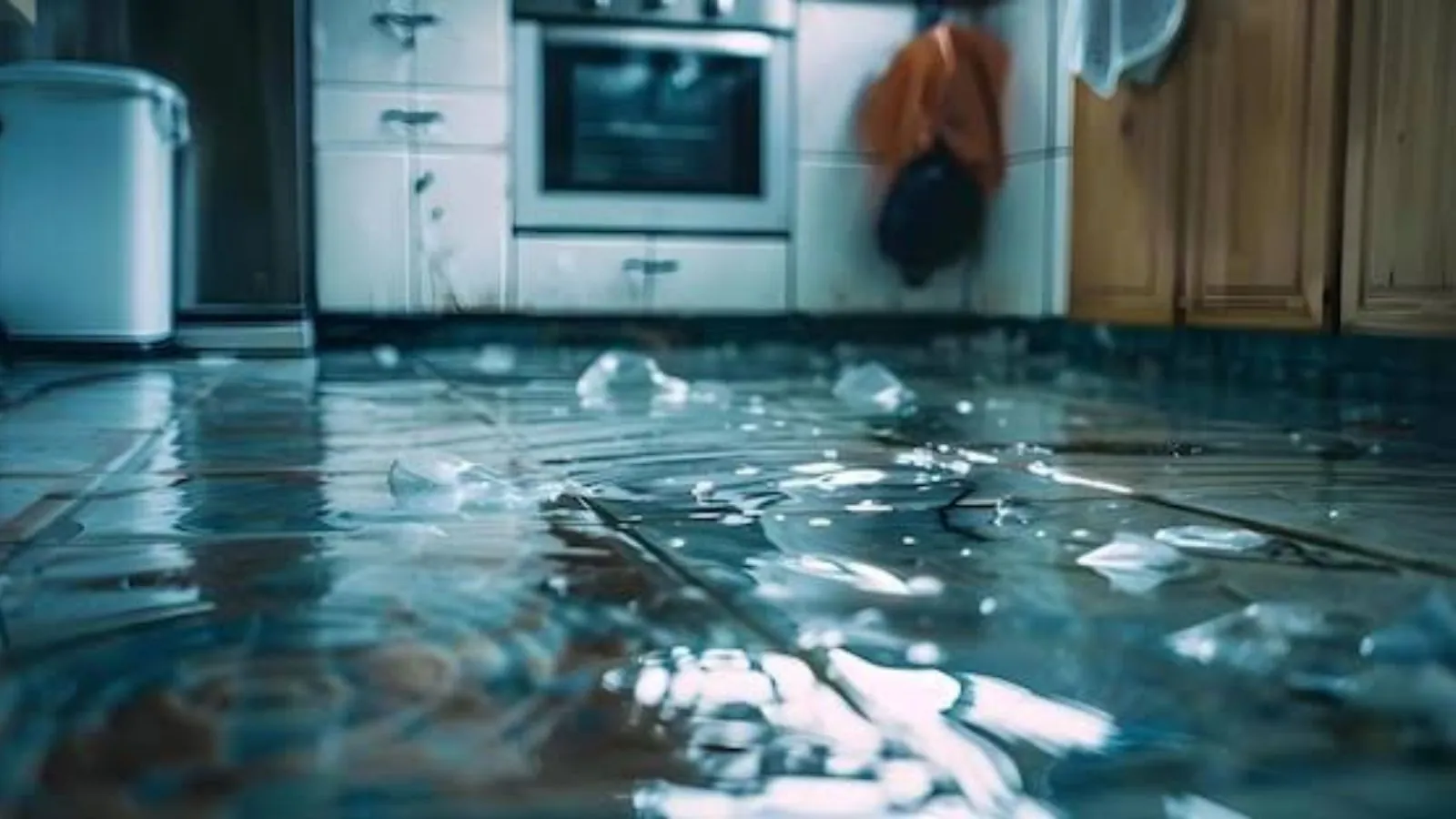
Washing machines, dishwashers, refrigerator ice makers and utility sinks all connect to pressurized water, and any of those connections can fail. Appliance leaks are different from pipe bursts because they often run slowly, behind the unit, until the floor tells you something is wrong. This page covers the common failure points, how to stop an active leak and how cleanup works. Call 24/7.
Professional drying after an appliance leak follows the ANSI/IICRC S500 standard, which sets goals from dry reference readings in the same home.
When an appliance leak needs a crew
A little water on the floor from a dishwasher door is a mop job. Water that runs under cabinets, soaks the subfloor or stains a ceiling below needs meters and drying equipment. Call when water has spread beyond the appliance, when the floor feels soft or when the leak has been running for hours or days.
Common failure points
Washing machine supply hoses
Rubber hoses can bulge, crack and burst under pressure, especially if the machine runs while no one is home.
Dishwasher supply and drain lines
A loose clamp or cracked line leaks into the cabinet base and flooring.
Refrigerator ice maker lines
A thin plastic line behind the fridge can leak for days and rot the subfloor.
Utility sink and laundry drains
A loose trap or overflow floods a closet or laundry room floor.
Stop the leak first
- Close the shutoff valve behind or beside the appliance. If there is none, close the main.
- Unplug the appliance only if the floor and outlet are dry. Otherwise switch off the breaker if the panel is safe to reach.
- Pull the appliance away from the wall if you can do so safely so water is not trapped behind it.
- Remove standing water with towels and a wet vacuum, and photograph the area.
- Call us if water has reached cabinet bases, flooring or a ceiling below.
What to do before the crew arrives
- Close the shutoff valve on the appliance supply line, or the main if you cannot find it.
- Unplug the appliance only if the floor around the outlet is dry.
- Do not open a wet control panel or run a wet appliance.
- Pull the appliance out only if it is safe, and photograph the hose, valve and floor.
- Keep the failed part for your insurer.
How we dry appliance leak damage
Water from an appliance behaves like water from any clean line. It goes under cabinets, into the gap between flooring and subfloor and along baseboards. We pull the water out, meter the cabinet bases and flooring, and remove toe-kick boards so air can move. Wet particleboard cabinet bases swell quickly and often cannot be saved. Plywood and solid wood dry better.
Laundry rooms on upper floors can leak into ceilings below, so we also check the room underneath. If a ceiling stains, see ceiling water damage repair. If the leak reached the kitchen floor, the kitchen water damage page covers cabinets and counters in more detail.
Rentals and condos
About half of Chapel Hill housing units are renter occupied per Census QuickFacts, and many apartments and condos stack laundry above living space. If your appliance leak affected a neighbor, tell your landlord or HOA right away and share your photos. Do not move wet materials out before documenting them, because an insurer or property manager may want to see them.
Hose and line replacement is part of the fix
Cleanup does not prevent the next leak. Replace rubber washer hoses with braided stainless hoses, check them every year, turn off the washer supply when you leave town, and consider a leak sensor and an automatic shutoff. A plumber or appliance technician should handle repairs to the supply line.
Common appliance sources compared
| Source | Typical leak | Where water goes |
|---|---|---|
| Dishwasher hose or door seal | Slow drip or sudden spray | Cabinet base and kitchen floor. |
| Washing machine hose | Burst under pressure | Laundry floor and rooms below. |
| Refrigerator ice maker line | Slow hidden leak | Behind the unit and under flooring. |
| Water softener or filter | Fitting failure | Utility room and adjoining walls. |
For the room-level view, see kitchen water damage, ceiling water damage and water extraction.
What changes the cost
Cost follows how long the leak ran, how many rooms and floors were wet, what materials soaked, drying days and the rebuild of flooring and cabinets. A single leak under a dishwasher is smaller than a washer hose that ran overnight on a second floor. Scope and price are explained before work starts. Want your real number? Call (844) 950-6900.
Sudden appliance failures are often covered by homeowners policies, while long-term seepage often is not. Ask your insurer and keep the failed hose or part.
Questions homeowners ask
Do you handle appliance leak emergencies at night or on weekends in Chapel Hill?
Yes. The 24/7 dispatch line takes calls at any hour, and we send a crew the same day when one is available. Close the appliance shutoff, unplug only if safe and call.
Can the floor be saved after a dishwasher leak?
Often yes, if the leak is found quickly and the subfloor is dried. Laminate and engineered wood are more vulnerable than tile, so tell us the floor type.
Who is responsible if my washer leaks into a neighbor?
That depends on your lease, HOA rules and insurance. Document the damage and notify your landlord or insurer.
Should I keep the broken hose?
Yes. Keep the failed part and take photos, since an insurer may ask to see it.