
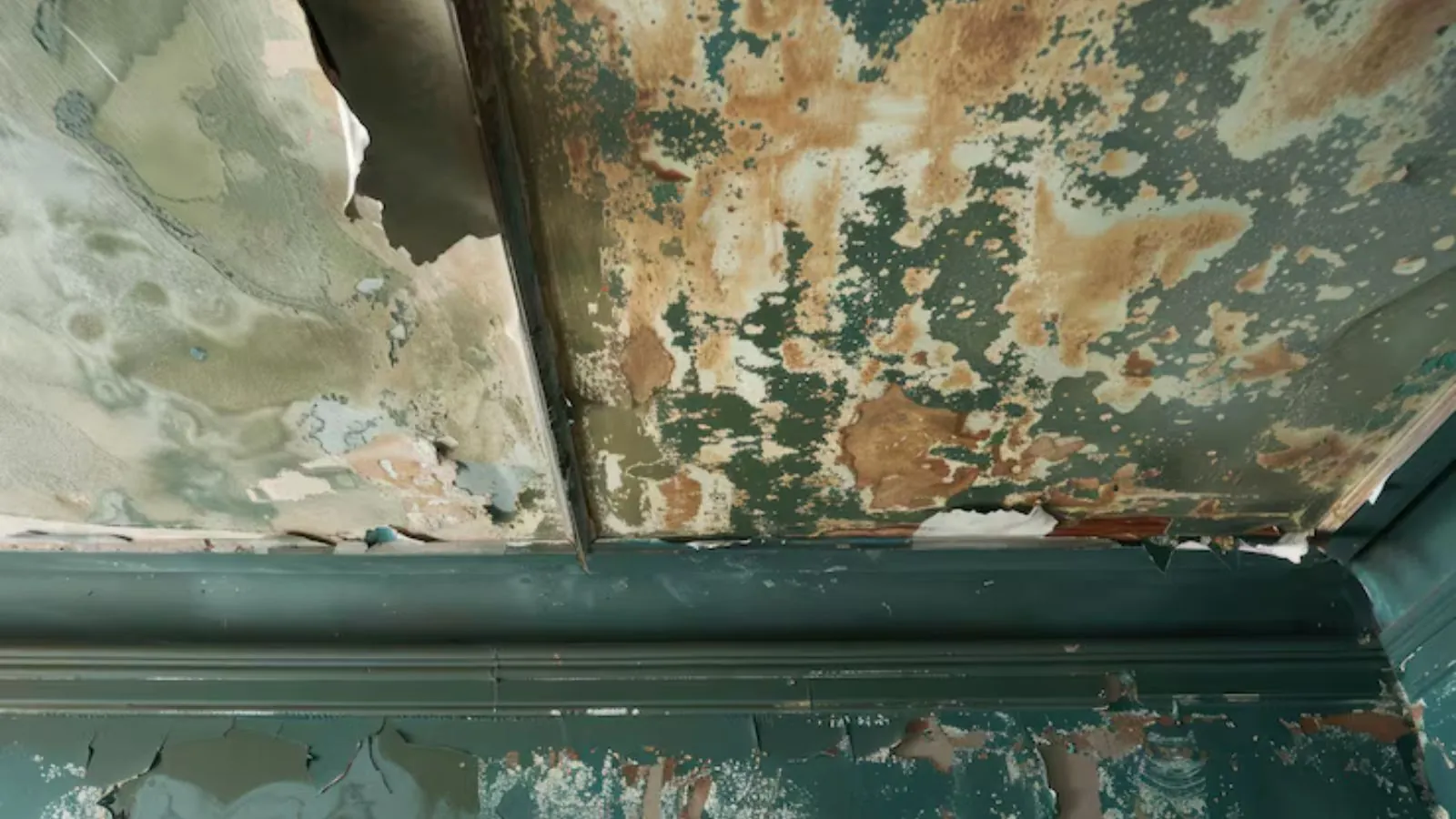
You find a brown stain on a ceiling or a soft spot in a floor and wonder whether it is a leak that just happened or a problem that has been there for years.
The ANSI/IICRC S500 standard is the usual reference for how moisture is measured and recorded.
The answer matters. A new leak is urgent, and an old one may be dry but still need repair. For insurance, the age of damage can affect a claim. This guide describes the signs to look for, the tests that help and the limits of guessing. Only measurement and a trained eye can confirm the age and state of damage.
Signs of a new or active leak
Damp or cool surface
Water is present now, and a moisture meter reads high.
Fresh, soft stain with no hard edge
The stain is still spreading.
Dripping or sound of water
Active flow is likely.
Paint bubbling or fresh peeling
Moisture is pushing the paint now.
Rising water bill
A hidden leak may be running.
Signs of old or dry damage
Hard, defined ring
Repeated wetting and drying leaves a ring.
Dry stain that feels stiff
The surface is dry but marked.
Dark or black staining
Long moisture exposure, possibly with growth.
Warped or rotted wood
Long-term moisture damages wood.
Musty smell that persists
Moisture has been present for a while.
The ring test and its limits
A single stain is not proof of age. Several rings can mean repeated wetting. A dry ring can still be active again after the next rain. A ring does not tell you when the leak started. Treat visual clues as hints and confirm with a meter.
What a technician checks
A technician measures moisture in the stain and in surrounding materials. Wet readings point to an active or recent problem. Dry readings suggest an older, resolved problem. A thermal camera can show cooler areas where moisture is present. They also look for the source, such as a pipe, roof penetration or window. A plumber or roofer may be needed to find and fix it.
Why age matters
Insurance often distinguishes sudden damage from long-term damage. A recent break is more likely to be treated as sudden. Long-term seepage is often excluded. If you buy or sell a home, disclosure rules may apply. Repair also differs. An old dry stain may need only sealing and paint, while an active leak needs the source fixed first. See ceiling water damage repair for how stains are handled.
Safe checks you can do
- Look at the stain in daylight and photograph it with a coin for scale.
- Mark the edge with a pencil and the date. Check again in a day.
- Touch the area with a dry paper towel. Damp means moisture.
- Look above the stain for pipes, vents and roof penetrations.
- Do not poke holes in a ceiling that may hold water.
Old damage still needs attention
A dry old stain can hide rot, mold or weakened framing. If wood feels soft, if a smell lingers or if the stain keeps returning, call a professional. Old damage can also mean there is a recurring problem, such as a roof flashing issue that leaks with each storm.
Seasons and recurring stains in Chapel Hill
Central North Carolina gets heavy summer thunderstorms and winter freezes, so stains often return in patterns. A ceiling stain that darkens after a storm points to the roof or a window.
A stain near a bathroom that appears after showers points to plumbing. A February stain after a hard freeze may point to a pipe that split and then thawed. The National Weather Service in Raleigh noted ice across the Triangle on January 10 and 11, 2025, which is the kind of event that can set up delayed leaks.
Hidden damage behind the stain
A stain on a ceiling can mean wet insulation above it. A stain on a wall can mean wet framing behind it. Feel the area for cold spots and check closet floors and cabinet bases nearby. If you see rust on nails or fasteners, the area has been wet. See wall and drywall water damage repair.
Documentation for sellers and buyers
If you are selling, a dry old stain should be repaired and disclosed properly. If you are buying, an inspector may use a meter and camera to check. Keep records of repairs and receipts for any water-related work. These records show that the problem was found and fixed.
What to do next
Photograph the stain, shut off water if you suspect a pipe and call for a moisture check. If you believe the leak is active, call right away. Call (844) 950-6900 to talk through what you found.
What a plumber or roofer adds
Once a technician says moisture is present, someone must find and fix the source. A plumber can pressure test lines and inspect fixtures. A roofer can check flashing, shingles and penetrations. An HVAC technician can check condensate lines and pans. Without a repair, drying will not last. Ask each trade to document what they found with photos.
Old damage that still needs repair
Dry old stains may still need work. Stained drywall can be sealed, primed and painted. Rotted framing needs to be replaced. Wet insulation that dried may have lost its value and should be replaced. If mold is present, a mold professional should assess it. Cosmetic repair alone is not enough if the structure was damaged.
Keeping records for the future
Keep dated photos of stains, notes about rain or plumbing use and receipts for repairs. If a stain returns, you can show whether the repair worked. Records also help if you sell the home or make an insurance claim down the road.
Smell, sound and touch
Your senses add clues a camera cannot. A fresh leak often smells like wet cardboard or damp towels. An older one smells earthy or sour. Tapping a stained ceiling may sound dull where the material is soft. Pressing a baseboard may show crumbling at the bottom edge. Report these observations to the technician, because they help decide where to measure first.
Rental and shared walls
If you rent, report any stain immediately and keep a copy of the message. If the stain is below another unit, water may be coming from that unit. Ask the manager to check upstairs. Old stains that were never repaired can still be a landlord responsibility, and written notice protects you.
The same advice applies if you live outside town. We also serve homeowners in Bynum and Morrisville, and the emergency line is the same.
Prefer to talk it through? Dial (844) 950-6900 any hour.
Questions about this topic
Can a stain tell me exactly how old the leak is?
No. A stain is a clue, not proof. A meter and source check give better answers.
Is a dry stain safe to paint over?
Only after you confirm it is dry and the source is fixed. Paint does not stop a leak.
Do old stains mean mold?
Not always, but dark staining and odor can indicate long-term moisture. Have it checked.
Should I disclose past water damage when selling?
Disclosure rules apply in many cases. Ask your agent or attorney.