
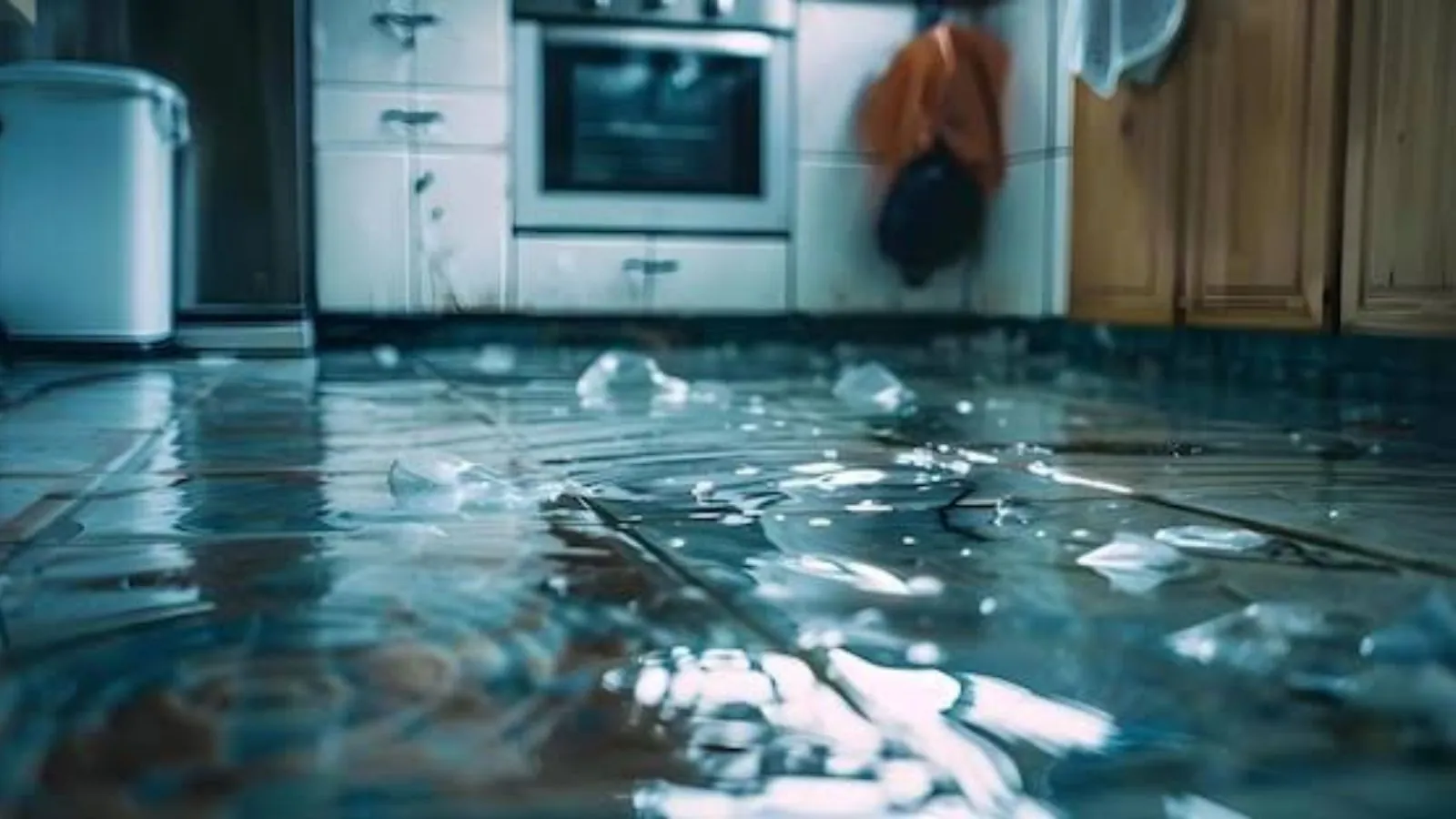
A small leak sparks a surprisingly big decision. Insurance exists for large, unexpected losses, but a pipe under a sink can look small and still hide serious damage. Meanwhile, claims can affect future premiums and renewals, and most policies have deductibles that swallow small repairs. This guide explains how to weigh the choice. It is general information, not insurance advice, and your agent knows your policy best.
The ANSI/IICRC S500 standard is a common reference when a drying scope is documented for a claim.
Start with the real size of the problem
A stain on a ceiling or a damp cabinet floor may be the visible tip of a larger wet area. Before you decide, find out how far the water went. A moisture meter and thermal camera can map wet drywall, insulation and flooring in minutes. Our wall and drywall page explains how hidden moisture is found. A leak that looks like fifty dollars of repair can turn into thousands if it sat behind a wall for weeks.
Compare the cost with the deductible
Your deductible is what you pay before the insurer pays. If the likely repair is below or near the deductible, filing may bring little benefit. If it is far above, a claim may be worthwhile. Get a clear scope first so you are comparing real numbers. Ask your agent which deductible applies to water losses, since some policies use a separate or percentage-based deductible.
Think about future premiums
Insurers track claims. A paid claim can affect your renewal price or availability, and some insurers also consider inquiries. Practices vary by company and state, so the safest approach is to ask your agent general questions about how claims affect renewals before filing. Be honest and factual when you describe the loss. Do not hide a loss that you filed, and do not assume a small claim has no consequences.
Reasons to file even if it feels small
The damage may be larger than it looks
Hidden moisture can raise costs sharply.
The source is unknown
An unexplained leak may involve a shared line or a roof problem.
Mold or rot may follow
Delays can create secondary damage.
You have a notice requirement
Many policies require prompt notice of a loss.
A neighbor is affected
Water that reached another unit can create liability.
Reasons you might not file
Cost is below the deductible
You would pay the entire repair yourself anyway.
The cause is excluded
Gradual leaks and maintenance issues are often not covered.
You expect a premium increase
Weigh long-term costs against the benefit.
The fix is simple
A quick dry and replace of one section may not need a claim.
A practical decision path
- Stop the water and photograph everything.
- Have a technician measure the extent of moisture.
- Get a scope and rough cost for drying and repair.
- Read your deductible and ask your agent how claims affect renewals.
- Decide whether to file, but do not delay drying while you decide.
Do not let the claim decision delay drying
Whether or not you file, the wet area must dry. Waiting to decide can turn a small leak into a large one, and most policies expect you to prevent further damage. Drying costs are a legitimate expense, and you can keep records in case you decide to file later. See structural drying for how the process works.
Chapel Hill and rental situations
Census QuickFacts shows that about 48.7 percent of Chapel Hill housing is owner-occupied, so a large share of leaks involve renters. A renter should tell the landlord immediately and ask who will repair the damage. Renters insurance covers belongings, not the building. If water reached a neighbor, the landlord's policy and the neighbor's policy may both come into play. Keep written records of every conversation.
Document either way
Even if you do not file, keep photos, receipts and notes. If a hidden problem appears later, those records help. Save the failed part, such as a hose or fitting, and note the date. If you decide to file after all, you will be ready.
What the North Carolina Department of Insurance says
The department advises homeowners to document damage and keep receipts when preparing a claim. See its page on claims and adjuster information. If you have questions about a specific insurer, the department also takes consumer inquiries.
What we can tell you
We can show you where the water went, what is wet and what drying involves. We cannot tell you whether to file or whether the insurer will pay. For a sudden break, see burst pipe water damage to understand how a covered loss is typically documented.
Talk to your agent in plain terms
Call your agent and say, "I have a small leak and I am considering a claim. What should I know about my deductible and how this might affect renewal?" Agents hear this every week and can give guidance. If the leak is active, keep drying while you talk.
Small leaks that are not small
Some leaks stay small only on the surface. A slow drip from a dishwasher can wet a subfloor for weeks. A faint ceiling stain can mean saturated insulation above it. A damp patch near a tub may signal a failed shower pan. In each case, the visible damage is a small share of the actual wet area, and the cost to dry and repair grows the longer it sits. That is why a moisture check before the filing decision is so valuable.
What a moisture check gives you
A technician maps wet areas and tells you what is wet, what can dry in place and what must come out. That scope gives you a realistic repair number to compare with your deductible. It also gives you photos and readings you can use if you decide to file. You are not committing to a claim by getting information. You are making a decision with facts instead of guesses.
If you decide not to file
Pay for drying and repair promptly, keep your records and consider asking your agent whether the loss should be noted. Fix the source so it does not repeat, since a second loss may be viewed differently by the insurer. If you plan to sell, keep records of the repair so you can answer buyer questions.
If you decide to file
Report the loss, follow the insurer's instructions and keep drying. Provide the scope, readings and receipts when asked. Stay in touch with the adjuster and keep a log of every call. If the claim is denied or reduced, you can ask for a written explanation and request a review.
The same advice applies if you live outside town. We also serve homeowners in Morrisville and Pittsboro, and the emergency line is the same.
Call (844) 950-6900 if you want the leak measured before you decide.
Prefer to talk it through? Dial (844) 950-6900 any hour.
Questions about this topic
Will a small water claim raise my premium?
It can, depending on the insurer and your history. Ask your agent general questions before filing.
Can I decide later whether to file?
Many policies require prompt notice, so do not wait long. Keep records either way.
Is a leak under my deductible still worth documenting?
Yes. Photos and receipts protect you if hidden damage appears later.
Should I dry the area before talking to my insurer?
Yes, after photographing it. Drying is a duty and delays make damage worse.