
Water damage is rarely as simple as a stain on a ceiling. Water travels through walls, under floors and into insulation, and it can sit in building materials long after the surface looks dry. A moisture meter lets a technician measure what is inside the material, which is why it is the main tool for deciding what to dry and what to remove. This guide explains the instruments, what the numbers mean and how to read a drying log.
Why your eyes are not enough
Drywall, wood and concrete hide water well. A wall may feel dry to the touch and still hold moisture in its lower edge. A hardwood floor may look flat today and cup next week. Humidity in the air can stay high for days after a leak. Without measurement, you are guessing about whether the structure is truly dry.
The tools technicians use
Pin moisture meter
Two pins push into the material and read electrical resistance. Useful for wood and drywall.
Pinless moisture meter
A flat sensor scans below the surface without a puncture. Good for finding wet areas quickly.
Thermal camera
Shows temperature differences that can point to wet areas behind surfaces.
Thermo-hygrometer
Reads air temperature and relative humidity so drying conditions can be set.
Hygrometer probes in slabs
Sensors for concrete moisture in some projects.
No single tool tells the whole story. A thermal camera can suggest where to look, and a meter confirms. Each has limits, and readings must be interpreted by someone trained in how they work.
What the readings mean
Meters report numbers on different scales depending on the material and the device. Wood is often read as a percentage moisture content. Drywall may be shown on a relative scale. The key idea is comparison. A technician measures a dry reference area in the same house and uses it as the target. Wet areas are dried until their readings approach the dry reference. Drying standards such as ANSI/IICRC S500 describe the general process for professional water damage restoration.
Reading a drying log
A drying log is a simple record, usually kept daily. It lists the rooms, the materials, the readings, the equipment in place and the room conditions. A good log shows readings falling over time. If readings stall, the crew adjusts equipment, opens a cavity or looks for another source of water. When the numbers reach the dry goal, equipment can come out.
Common readings mistakes
- Reading only the surface and missing wet insulation behind it.
- Comparing a reading to a number from another material.
- Ignoring humidity in the air and focusing only on walls.
- Stopping drying because the surface feels dry.
- Not logging readings, which makes it hard to prove the structure is dry.
Hidden leaks and moisture mapping
When a home has an unexplained stain, musty smell or high water bill, moisture mapping can help. The technician scans walls, ceilings and floors in a pattern and marks wet areas. Following the marks often leads toward the source. A plumber then confirms the leak and repairs it. Our slab leak and wall and drywall pages show how mapping fits into those problems.
Chapel Hill climate and drying
Central North Carolina has humid summers, and humid air slows drying. That is one reason dehumidifiers matter so much locally.
In winter, a house may be dry on the surface but cold, and cold slows evaporation. The crew adjusts equipment to the season. The National Weather Service in Raleigh reported that January 2025 was the first colder-than-normal month in about 19 months. Ice fell across the Triangle on January 10 and 11, a reminder that freezing weather can also bring pipe breaks and wet structures.
Can homeowners buy a meter?
Consumer meters exist, and they can help you notice wet spots between professional visits. Their readings are less reliable than professional tools, and they cannot replace a trained interpretation. If you buy one, compare readings against a known dry area and do not treat it as proof that a structure is dry after a major loss.
Moisture and mold
Mold needs moisture to grow. Keeping materials dry is the best prevention. If readings stay high or a musty smell remains after drying, tell the technician. Mold concerns beyond drying are handled by mold professionals. This site does not offer mold remediation.
When readings are an insurance record
Many adjusters ask for moisture readings and drying logs. They show how far water spread and when the structure reached a dry state. Ask your restoration company for copies and keep them with your photos and receipts. See water extraction for how the first readings are taken.
Typical places we meter first
After extraction, the survey usually begins at the source and fans outward. Technicians check the lowest edge of walls, the area behind cabinets, the floor at doorways, the ceiling below bathrooms and kitchens and any area with staining. They test both sides of a wall when possible. Corners and joints are important because water often follows framing and pipes.
Slabs, concrete and special cases
Concrete stores water and releases it slowly, so a slab can read wet long after the surface is dry. Technicians may use specialized probes or wait for readings to trend down over several days. Stone, tile and engineered flooring also need careful interpretation, because adhesives and backing can trap water below the surface.
Temperature and humidity readings
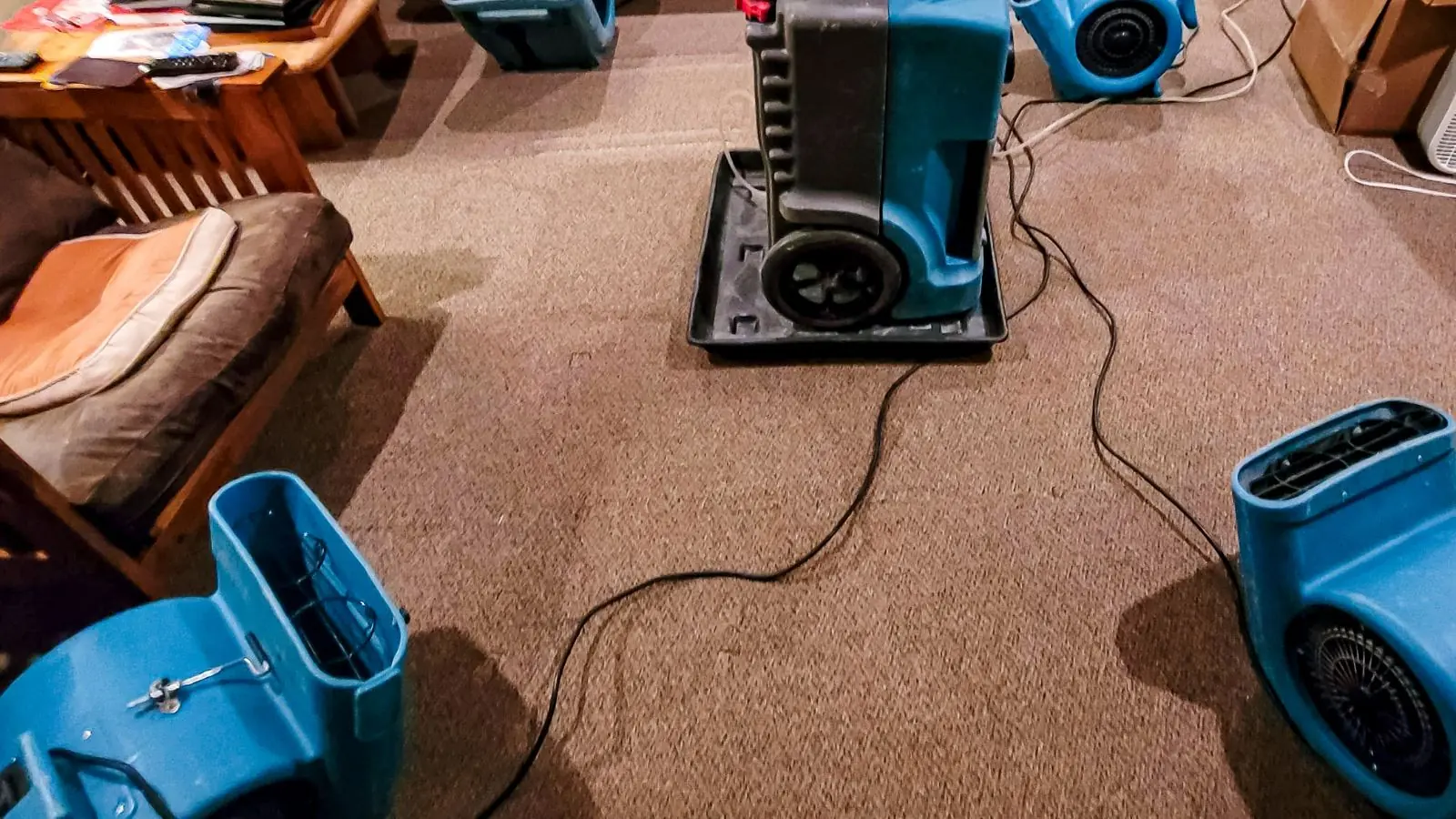
Alongside material readings, crews record the temperature and relative humidity of each room and sometimes the outside air. The goal is a drying environment that lets materials release water. If the air in the room stays humid, drywall and wood will not dry, no matter how many fans run. That is why dehumidifier capacity and room closure matter so much.
Questions to ask your technician
Ask what the dry reference reading is, where it was taken and what target the crew is aiming for. Ask to see the readings in the log, not just a verbal summary. Good crews are happy to explain, because showing the numbers builds trust and gives you something you can pass to your insurer.
Moisture readings after a repair
Once a plumber fixes the source and the crew finishes drying, a final set of readings is a good idea before walls are closed. Closing a wall over damp framing traps moisture and invites trouble. Ask the contractor to confirm that framing, subfloor and drywall edges read dry before insulation, drywall and paint go on.
The same advice applies if you live outside town. We also serve homeowners in Durham and Pittsboro, and the emergency line is the same.
Call (844) 950-6900 if you suspect hidden moisture in a wall, floor or ceiling.
Prefer to talk it through? Dial (844) 950-6900 any hour.
Questions about this topic
Can I check for hidden water with a household moisture meter?
It can help you notice wet spots, but professional tools and interpretation are more reliable after a loss.
What is a normal moisture level for drywall?
It depends on the device and scale. Technicians compare wet areas to a dry reference in the same house.
Why do technicians use a thermal camera?
It shows temperature differences that can point to wet areas, which a meter then confirms.
How do I know drying is finished?
Readings in affected materials match the dry reference and the log shows stable numbers.