
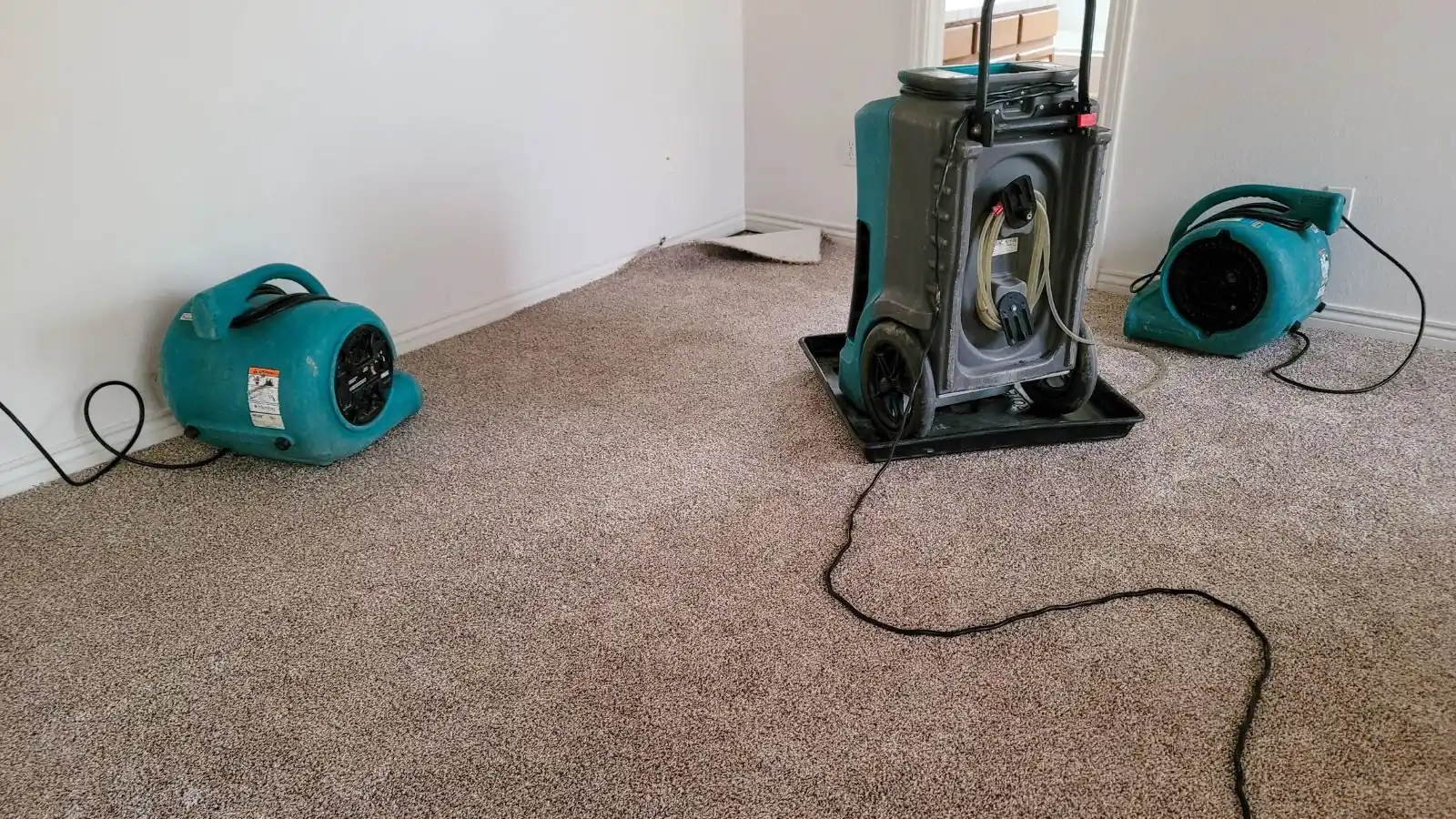
Many homeowners can safely handle a small spill, such as a tipped bucket, a minor sink overflow or a drip on a tile floor.
The ANSI/IICRC S500 standard is written for professionals, and it is the reason larger losses need meters and logs.
Others try to handle a much larger problem and end up with hidden moisture and mold. This guide explains what you can do yourself, where the line is and why professional equipment matters for bigger jobs. We would rather tell you honestly that you do not need us than sell you a job you can handle.
When DIY drying makes sense
Small amount of clean water
Less than a few gallons from a supply or container.
Hard, sealed surfaces
Tile, sealed vinyl or finished concrete.
Caught within an hour or two
The water has not soaked in.
One small area
No spread into walls, cabinets or adjoining rooms.
First steps for any spill
- Stop the source and turn off the water if needed.
- Check for electrical hazards. Do not touch outlets or cords near water.
- Soak up water with towels or a wet vacuum.
- Wipe the surface dry and lift rugs or mats.
- Open windows if the weather helps and run a fan and a dehumidifier.
- Check again in a few hours for dampness at baseboards and under items.
Tools that help
A wet and dry vacuum, towels, a box fan and a household dehumidifier can handle small jobs. Move furniture so air reaches the wall base. Use foil or plastic blocks under legs. Keep running the dehumidifier until the area feels dry and the air smells normal. A household dehumidifier removes only a limited amount of moisture, so it is not a substitute for professional equipment.
When to stop and call
Water in walls or under floors
You cannot reach it.
Carpet and pad soaked
Pad holds water and is hard to dry.
Hardwood or laminate cupping
Specialized drying may be needed.
More than a small area
Moisture spreads quickly.
Water from sewage or a flood
Contaminated, do not DIY.
Water for more than a day
Mold risk rises.
Electrical equipment is near
Safety first.
Mistakes that make damage worse
- Using a regular household vacuum on water.
- Using a heater or hair dryer to force drying, which can crack boards or damage finishes.
- Walking on wet carpet.
- Painting over a stain before it is dry.
- Ignoring a musty smell.
- Leaving wet items stacked together.
- Assuming a dry surface means a dry wall.
How to check if it is dry
Touch alone is not enough. A moisture meter helps. Check baseboards, wall bottoms and under furniture. Check again the next day, since moisture can migrate back to surfaces. If an area keeps feeling damp or a smell develops, there is hidden moisture. Our carpet water damage and kitchen water damage pages cover areas that often hide water.
Carpet and pad
For a small clean spill on carpet, blot, extract and lift the carpet edge to check the pad. If the pad is wet, it usually needs to be removed or professionally dried. Sealing the carpet back over a wet pad invites mold. If you are unsure, call.
Walls and cabinets
Wipe water from walls and cabinets, open doors and drawers and run a fan. If drywall feels soft or paint bubbles, there is more moisture than you can reach. Cabinets with swollen particleboard rarely recover. See wall and drywall water damage repair.
Local practice
Chapel Hill's humid summers make DIY drying harder.
When outdoor air is humid, opening windows can add moisture rather than remove it. A dehumidifier and closed windows may work better in summer, while open windows help on dry, mild days. In winter, cold air holds little moisture, but a cold house dries slowly. The National Weather Service in Raleigh noted ice across the Triangle on January 10 and 11, 2025, a reminder that freezing weather can bring pipe breaks that DIY cannot handle.
Safety reminders
Do not enter standing water near electrical equipment. Do not use gas appliances in a flooded space. Wear gloves and boots if you handle wet debris. If anyone has breathing problems, keep them out of damp, musty areas.
Insurance and DIY
If you plan to file a claim, photograph the damage before drying and keep receipts for supplies and equipment. Tell your insurer what you did. Do not discard damaged materials before documenting them.
Be honest with yourself
If you feel uncertain, call. A short call costs little and may save a lot of repair later. Call (844) 950-6900 to talk through your situation.
Choosing equipment if you do DIY
A wet and dry vacuum with a squeegee attachment pulls up standing water. Box fans move air, but they work best with a dehumidifier running in a closed room. Choose a dehumidifier sized for the space and empty it often or use a drain hose. Avoid extension cords that are damaged or too light for the load. Keep all equipment away from standing water.
Timeline for a small spill
For a small clean spill on a hard floor, the surface may feel dry within hours, but wall bases and cabinet edges can stay damp for a day or two. Check each day for dampness, odor and any change in paint or flooring. If anything feels off on day two or three, stop and call. A short check often catches a problem while it is still small.
Hidden spots to check
Water runs to low points, so check under appliances, behind toilets, along baseboards and inside cabinet bases. Lift rugs and check the underside. Look at the ceiling below if the spill was upstairs. Small amounts of water that go unnoticed in these places often cause the worst long-term problems.
DIY and the claim
If a small spill is below your deductible, DIY drying may be all you need. Keep your photos and notes anyway. If a hidden problem shows up later, those records help you show that you responded quickly.
A realistic example
Imagine a washing machine hose drips onto a laundry room tile floor overnight. You find a thin sheet of water, mop it up, run a fan and dehumidifier and check the baseboards the next day. That is a reasonable DIY job. Now imagine the same hose leaks for a weekend while you are away and the water reaches carpet in the next room. That is no longer a mop-and-fan situation, because the pad and subfloor are wet.
The same advice applies if you live outside town. We also serve homeowners in Pittsboro and Morrisville, and the emergency line is the same.
Prefer to talk it through? Dial (844) 950-6900 any hour.
Questions about this topic
Can I use fans and a dehumidifier myself?
For a small, clean spill on hard surfaces, yes. Larger or hidden moisture needs professional equipment.
Will a heater speed up drying?
It can damage materials. Use steady airflow and dehumidification instead.
How do I know if the pad is wet?
Lift a corner of carpet and feel or meter the pad. If it is wet, call.
When is DIY not safe?
With sewage, flood water, electrical hazards or large areas of water.